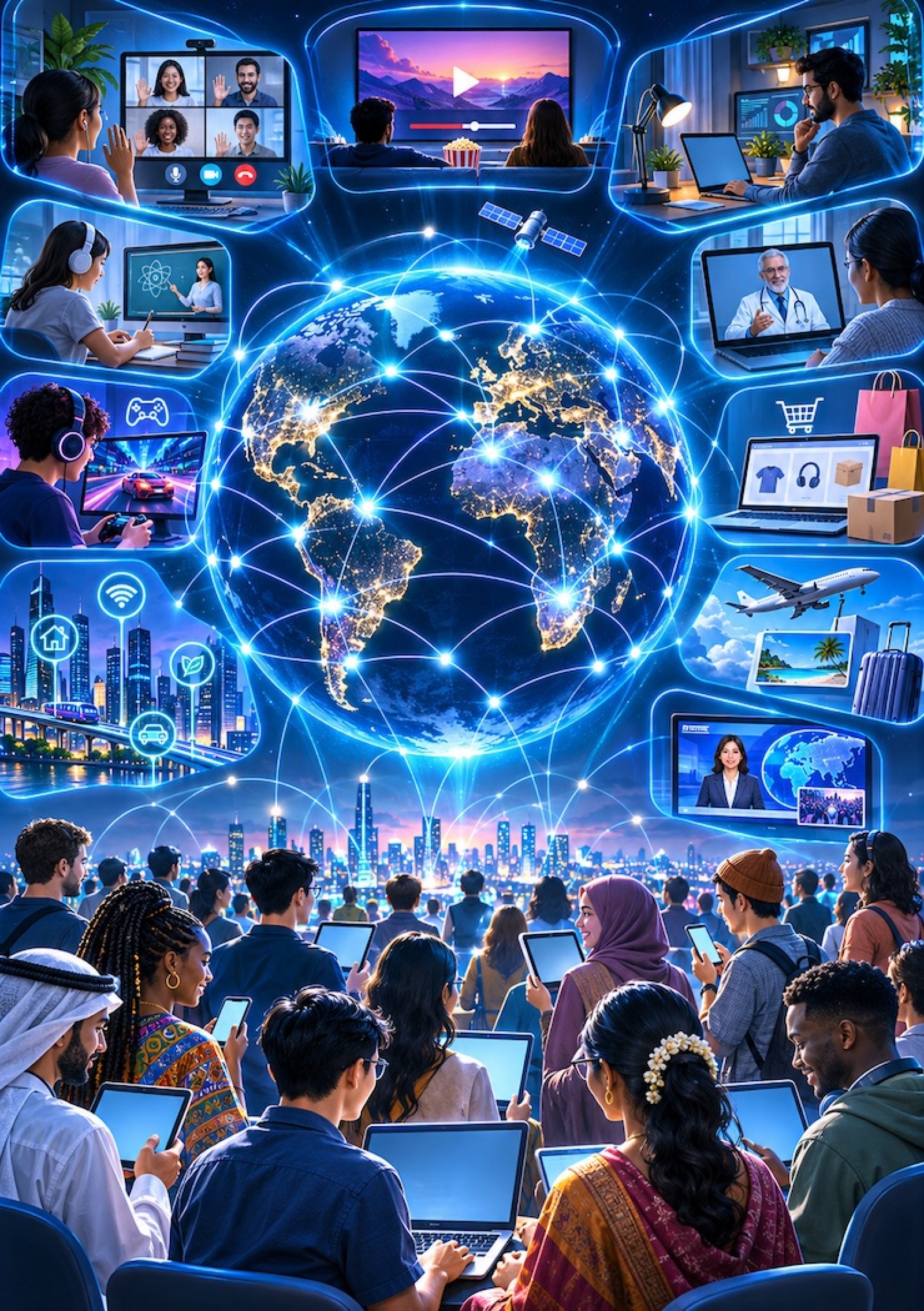
Even though the numbers are increasing year by year, the difference in standard of living from one continent to another means that all of humanity is still not connected to the global network. In detail, 2 billion people, or a quarter of the world’s population, are not connected to the internet, according to the latest estimates from the International Telecommunication Union (ITU, a United Nations agency specialized in information and communication technologies).
From 3.6 billion people offline in 2019 to 2 billion in 2026
Global growth is nevertheless significant: 6.3 billion people were connected in 2026 compared with 5.3 billion in 2022. In the same vein, if these 2 billion people are therefore still not connected today, they numbered 2.7 billion in 2022, and 3.6 billion (almost half of the world’s population) in 2019, before Covid.
Doreen Bogdan-Martin, Secretary-General of the ITU, speaks
“In the age of AI, being offline means being excluded from countless opportunities, from education to employment,” said Doreen Bogdan-Martin, Secretary-General of the ITU. More than ever, we must expand connectivity and make it truly useful for everyone, everywhere.”
A few additional figures from the ITU study:
• Internet use reaches 93% in high-income countries, compared with only 32% in low-income countries
• Worldwide, 79% of men and 74% of women use the internet. The ratio between the number of women and men using the internet has increased
• Young people remain more connected than the rest of the population: 86% of people aged 15 to 24 use the internet worldwide, compared with 74% of the rest of the population
• 82% of urban residents have access to the internet, compared with 63% in rural areas