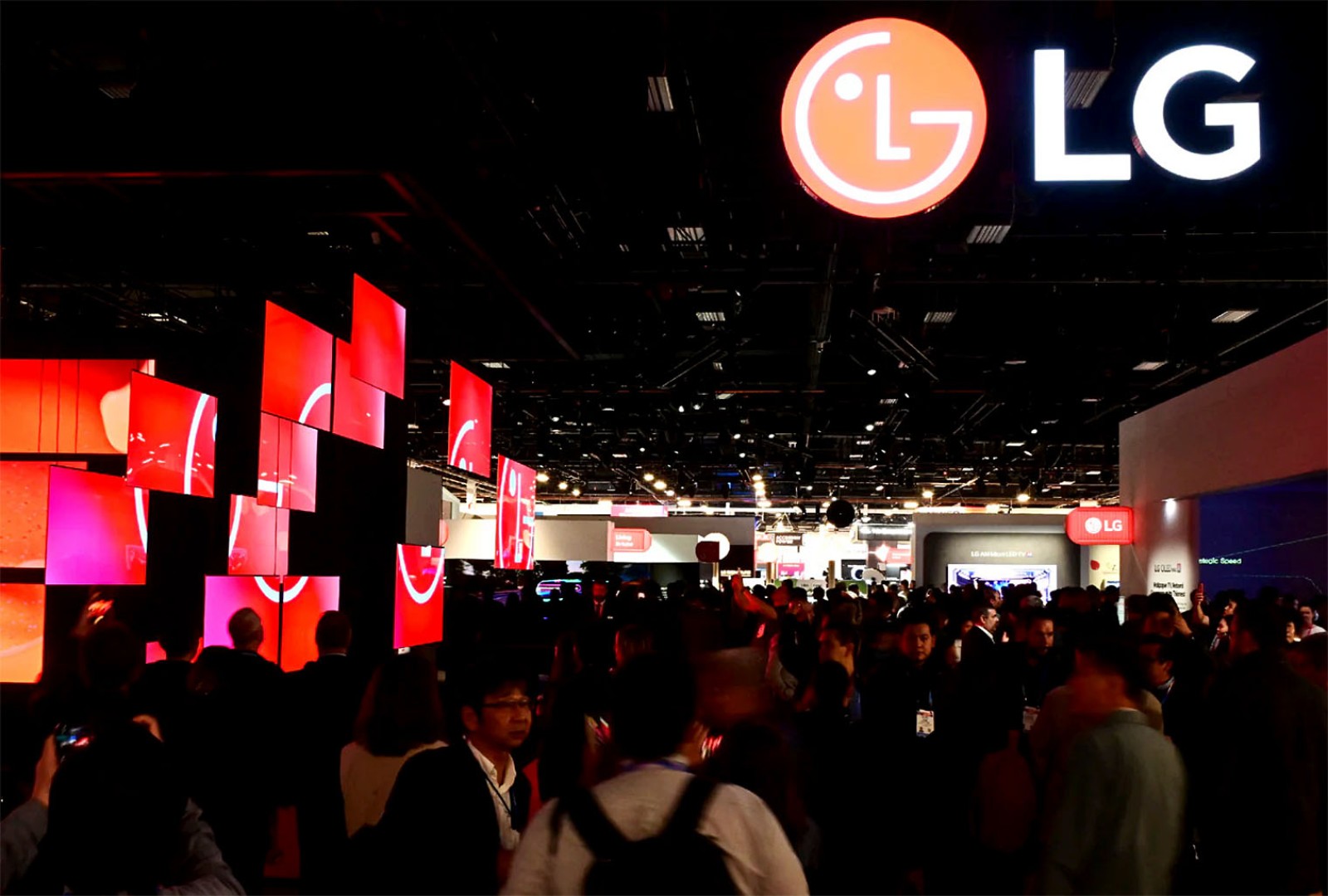
This is one of the key announcements from CES 2026 in Las Vegas. For the first time, LG Electronics isn't just aiming to break nit records, but to shatter the price ceiling. Driven by its CEO and a new Innovation Drive division, the Korean giant is launching the OLED SE (Special Edition) panel. Its goal? To lower the cost of OLED technology to compete with the pricing of premium Mini LED TVs.
Behind the new OLED SE (Special Edition) panel designation unveiled at CES 2026 in Las Vegas lies a revolution far more profound than a simple name change. Under the direct leadership of its CEO, LG Electronics has launched an industrial commando mission with the ambition of aligning the price of OLED TVs with that of high-end LCD screens. OLED SE: Survival through price: High-performance, low-cost OLED panel. During his address at CES 2026, Lyu Jae-cheol, CEO of LG Electronics appointed at the end of 2025 to lead the 2026 strategy (see photo below), was clear: the time for Innovation Drive has arrived. A new internal division has been created with a single objective: to transform the company's cost structure to prioritize speed, action, and lower OLED panel prices. To achieve this pricing feat, LG is relying on a complete overhaul of its industrial operations. According to Lyu Jae-cheol's statements, LG Display has undertaken a radical simplification of its manufacturing processes for some of its OLED panels. Nothing official yet on the technical choices made by LG Display, but after discussions with our industry sources, behind the scenes this would translate into a major innovation: the reduction of the number of driver chips (DDIs) integrated directly into the heart of the panel (by integrating the pixel control functions directly into the panel, via Gate-in-Panel technology, LG would halve the number of DDIs, see CEO Jeong Cheol-dong's statement about a "simplification of manufacturing structures," see photo below), for example, going from 16 to 8 chips on a 65-inch panel. Similarly, backplane optimization would also be implemented. The panel's rear structure would have been simplified to reduce manufacturing steps in the factory. The result? A lighter structure, fewer components, and a lower production cost. This reduction in driver chips is, of course, linked to the DRD (Double Rate Drive) multiplexing technique. Traditionally, each driver chip controls one column of pixels. With DRD, the signal transfer speed is doubled. In practice, the DDI chip sends information for two columns of pixels, one after the other, at twice the frequency. For the human eye, retinal persistence and the OLED's switching speed make the image appear perfectly stable and simultaneous. It should be noted that the DRD process has existed for LCDs since the 2000s, but it was extremely difficult to apply to OLEDs. Unlike LCDs (voltage-driven), OLEDs are current-driven, which requires surgical precision. If the signal is too fast (double the bitrate), there is a risk of electronic noise or insufficient brightness. OLED SE: Optical Compensation, Pol-less as a Brightness Turbo. To compensate for the simplified (and therefore less powerful) electrical structure of the OLED SE panel, LG Display engineers must find a way to recover brightness elsewhere. This would be achieved optically by eliminating the polarizing filter. Its absence would indeed act as a turbo boost for brightness, as the polarizing filter absorbs on average 50% of the light emitted by organic diodes. To compensate for this absence and maintain high contrast, LG Display would use the COE (Color on Encapsulation) process. This innovation, confirmed by industry experts, makes it possible to double the panel's native brightness while drastically reducing material costs. In terms of brightness, OLED SE panels would be capable of displaying a peak brightness of around 1,000 to 1,200 nits.

OLED SE: LG Display's Spearhead to Compete with Mini LED Technology. The 120Hz OLED SE panel announced by LG Display, available in 48", 55", 65", 77", and 83" (see photo above), is the first fruit of this disruptive strategy. As the Korean business press points out, LG Display is no longer content with simply chasing nits. To halt the growth of Chinese manufacturers and the Mini LED TV segment, the Korean giant had to completely overhaul its approach. The OLED SE is not a cut-rate panel, but one "designed to lower its cost." This approach will allow LG Display to offer giant screen sizes, notably 83" (211 cm), at significantly more competitive prices than before. The objective? It is twofold. On the one hand, to increase the sales volume of OLED TVs (if the Guangzhou factory in China is producing at 90% of its capacity, (This is still only at 50% for the Paju factory in Korea, see photo below), on the other hand, to ensure the development of the webOS ecosystem to support the growth of the group's services.
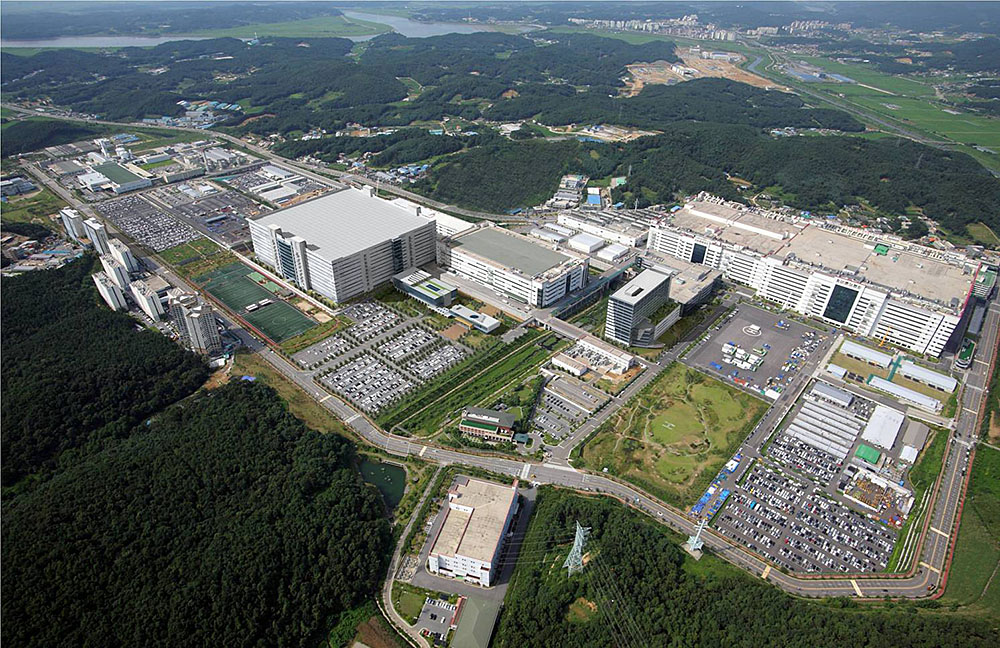
Ultimately, an OLED SE panel would offer brightness equal to or greater than a conventional panel (if the reduction in DDI results in a 20% decrease in brightness, the absence of a polarizer increases it by 100%) with a polarizer, for a significantly lower production cost, around 30%. Specifications that could allow OLED technology to hold its own on large screen sizes (83" and perhaps more) in terms of price. LG Display specifies that SE panels will be available from 2026 to its customer portfolio (B&O, LG, Loewe, Panasonic, Philips, Sony, Skyworth…).