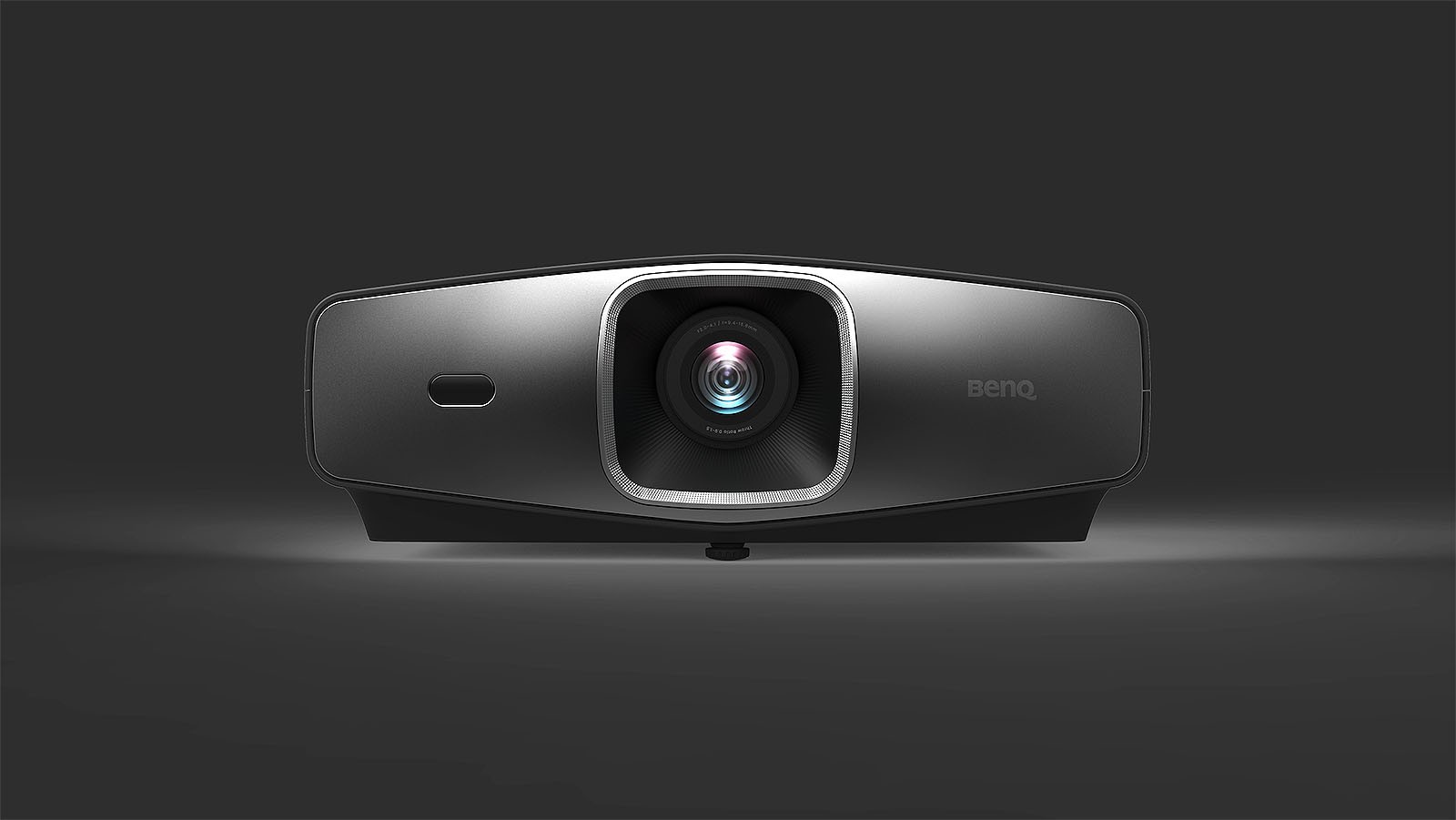
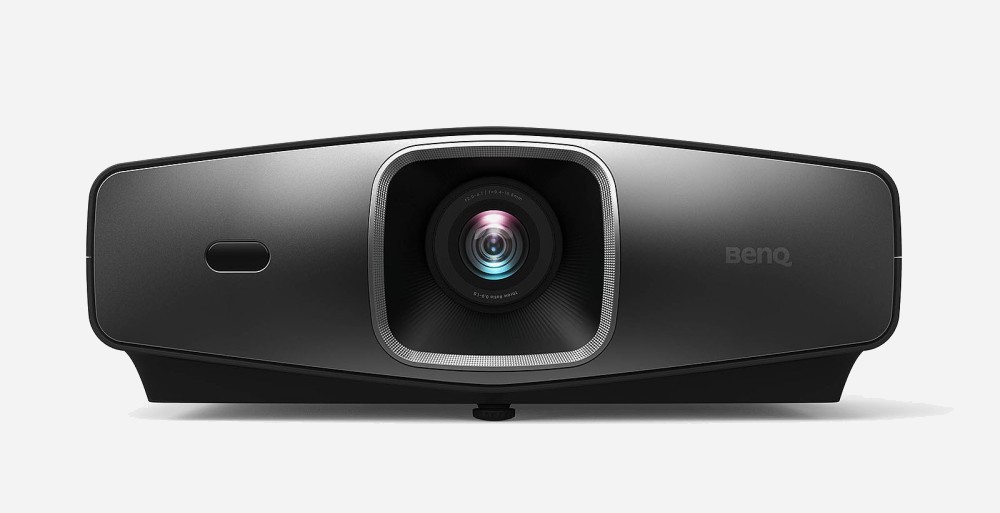
 BenQ W4200, motorized 100% glass optics and mechanical iris
One of the major assets of this new model lies in its brand-new 100% glass lens, fully motorized. It offers a projection ratio of 0.9-1.5, along with a 1.6x zoom. Placement of the device in the room is greatly facilitated by generous Lens Shift of ±50% on the vertical axis and ±23% horizontally. To maximize image dynamics in a dark room, BenQ has also equipped the W4200 with a mechanical iris adjustable in three positions. It is also worth noting the restrained operating noise level, listed at 27 dB in Eco mode and 29 dB in Normal mode.
BenQ W4200: MediaTek MT9681 chip, AI, Dolby Vision HDR and Imax Enhanced
Image processing reaches a new level with the integration of a new AI chip based on the MediaTek MT9681 processor. This computing power directly benefits Authentic Motion motion compensation, now optimized by artificial intelligence, as well as the in-house HDR Pro 2.0 processing. The BenQ W4200 is ready to exploit dynamic metadata with support for [abc]HDR10+[/abc] and [abc]HDR Dolby Vision[/abc], all supported by the integration of Filmmaker Mode and [abc]Imax Enhanced[/abc] certification to guarantee respect for the director’s intentions. Important note: the projector does not include the new Dolby Vision 2 HDR standard, compatible chips still being produced in too small quantities and reserved primarily for the television industry. Finally, fans of widescreen formats will appreciate the presence of a 2.35 mode, while the [abc]3D Ready[/abc] label is still included.
BenQ W4200, motorized 100% glass optics and mechanical iris
One of the major assets of this new model lies in its brand-new 100% glass lens, fully motorized. It offers a projection ratio of 0.9-1.5, along with a 1.6x zoom. Placement of the device in the room is greatly facilitated by generous Lens Shift of ±50% on the vertical axis and ±23% horizontally. To maximize image dynamics in a dark room, BenQ has also equipped the W4200 with a mechanical iris adjustable in three positions. It is also worth noting the restrained operating noise level, listed at 27 dB in Eco mode and 29 dB in Normal mode.
BenQ W4200: MediaTek MT9681 chip, AI, Dolby Vision HDR and Imax Enhanced
Image processing reaches a new level with the integration of a new AI chip based on the MediaTek MT9681 processor. This computing power directly benefits Authentic Motion motion compensation, now optimized by artificial intelligence, as well as the in-house HDR Pro 2.0 processing. The BenQ W4200 is ready to exploit dynamic metadata with support for [abc]HDR10+[/abc] and [abc]HDR Dolby Vision[/abc], all supported by the integration of Filmmaker Mode and [abc]Imax Enhanced[/abc] certification to guarantee respect for the director’s intentions. Important note: the projector does not include the new Dolby Vision 2 HDR standard, compatible chips still being produced in too small quantities and reserved primarily for the television industry. Finally, fans of widescreen formats will appreciate the presence of a 2.35 mode, while the [abc]3D Ready[/abc] label is still included.
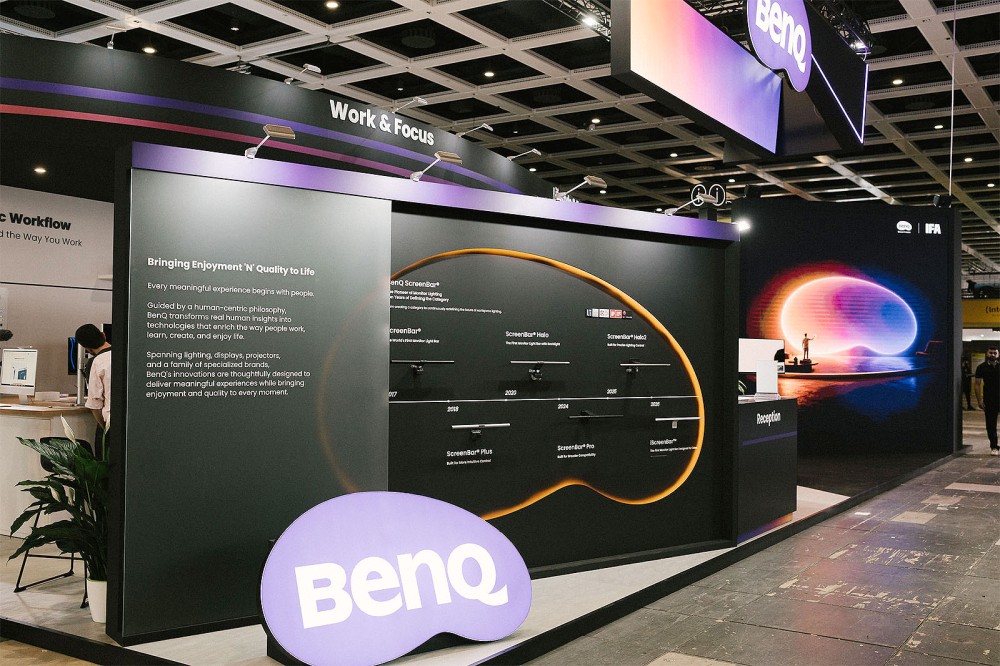 BenQ W4200: connectivity, Matter and the choice of 60 Hz
Completely devoid of a Smart TV interface to establish itself as a “pure projector,” in the words of its creator, the W4200 does not forget integration into the connected home, with native Matter compatibility. The connectivity includes Wi-Fi, an [abc]Ethernet[/abc] port (LAN), two [abc]HDMI[/abc] 2.1 inputs (one of which supports [abc]eARC[/abc]), an [abc]USB[/abc]-A port, a USB-C port, a 12V [abc]Trigger[/abc] port, and a 3.5 mm mini-jack audio output. As for refresh rate, the BenQ W4200 is limited to 60 hertz display. Asked about this choice, BenQ’s representative explains that although the onboard MediaTek chip allows 120 Hz, this display frequency is disabled so it caps at 60 Hz when geometric keystone corrections are used.
The BenQ W4200 is scheduled to go on sale in January 2027. Suggested retail price: 4,000 euros.
BenQ W4200: connectivity, Matter and the choice of 60 Hz
Completely devoid of a Smart TV interface to establish itself as a “pure projector,” in the words of its creator, the W4200 does not forget integration into the connected home, with native Matter compatibility. The connectivity includes Wi-Fi, an [abc]Ethernet[/abc] port (LAN), two [abc]HDMI[/abc] 2.1 inputs (one of which supports [abc]eARC[/abc]), an [abc]USB[/abc]-A port, a USB-C port, a 12V [abc]Trigger[/abc] port, and a 3.5 mm mini-jack audio output. As for refresh rate, the BenQ W4200 is limited to 60 hertz display. Asked about this choice, BenQ’s representative explains that although the onboard MediaTek chip allows 120 Hz, this display frequency is disabled so it caps at 60 Hz when geometric keystone corrections are used.
The BenQ W4200 is scheduled to go on sale in January 2027. Suggested retail price: 4,000 euros.
Key features of the BenQ W4200:
• Single-[abc]DLP[/abc] type
• [abc]Ultra HD[/abc] resolution
• Native resolution: 1,920 x 1,080 pixels (3,840 x 2,160 with Texas Instrument’s XPR4 wobulation technology)
• DMD chip: TI 0.47'' SST (Numb42)
• Contrast: 5,000,000:1
• Light source: triple [abc]RVB[/abc] laser
• Brightness: 3,200 lumens
• CinematicColor functions
• Google Assistant functions
• XPR wobulation functions
• Local Contrast Enhancer functions
• AI Cinema functions
• Global Contrast Enhancer functions
• Dynamic Black functions
• Dynamic Tone Mapping functions
• VRR functions
• HDR Pro 2.0 functions
• Hyper Wavelenght laser functions
• Authentic Motion motion compensation functions
• [abc]HDR10[/abc] compatibility
• [abc]3D Ready[/abc] compatibility ([abc]BD 3D[/abc] and DLP Link)
• [abc]HDR HLG[/abc] compatibility
• [abc]Wi-Fi[/abc] ac compatibility
• [abc]HDR10+[/abc] compatibility
• [abc]eARC[/abc] compatibility
• [abc]Imax Enhanced[/abc] compatibility
• Matter compatibility
• Gamut: 100% DCI-P3, 95% Rec.2020
• Audio section: [abc]1.0[/abc]
• Power: 5 W
• 3D compatibility: yes
• Connectivity: 2 [abc]HDMI[/abc] 2.1 inputs [abc]HDCP[/abc] 2.3, one 3.5 mm mini-jack output, one 12V [abc]Trigger[/abc], one [abc]Ethernet[/abc] port, one USB-A port, and one powered [abc]USB[/abc]-C port
• Zoom: 1.67x
• Noise level: 27 dB in Eco mode, 29 dB in Normal mode
• Lens Shift: vertical/horizontal (±50%/±23%)
• Other: mechanical iris (3 positions), 100% glass and motorized optics, 60 Hz (deliberate limiting for Keystone processing)
To find our detailed news on the technologies, trends or references mentioned in this report from the IFA 2026 trade show in Berlin, click on the following link: IFA 2026, discover all the new products live from Berlin