 FreeSync Premium Pro and a dedicated Game Bar are also included. The TSR AI processor supports upscaling, color correction, and motion optimization. An update planned for 2026 will add support for Dolby Vision 2 Max HDR and access to Xbox Game Pass without an external console. The main interface is based on Google TV, with Gemini integration for voice control, allowing users to adjust picture settings using voice commands.
 Picture
TCL X11L, C8L and C7L TVs: a closer look at SQD Mini LED 2026 technology
12.06.2026 • 15h17
For its 2026 range, TCL is further optimizing the backlighting of its new panels. The new SQD Mini LED technology, the 8th generation of the backlighting system invented by the Chinese manufacturer, which equips the TCL C7L and TCL C8L TV series and the flagship TCL X11L, guarantees an even more dynamic, brighter image with an even wider color palette. So, how does it work?
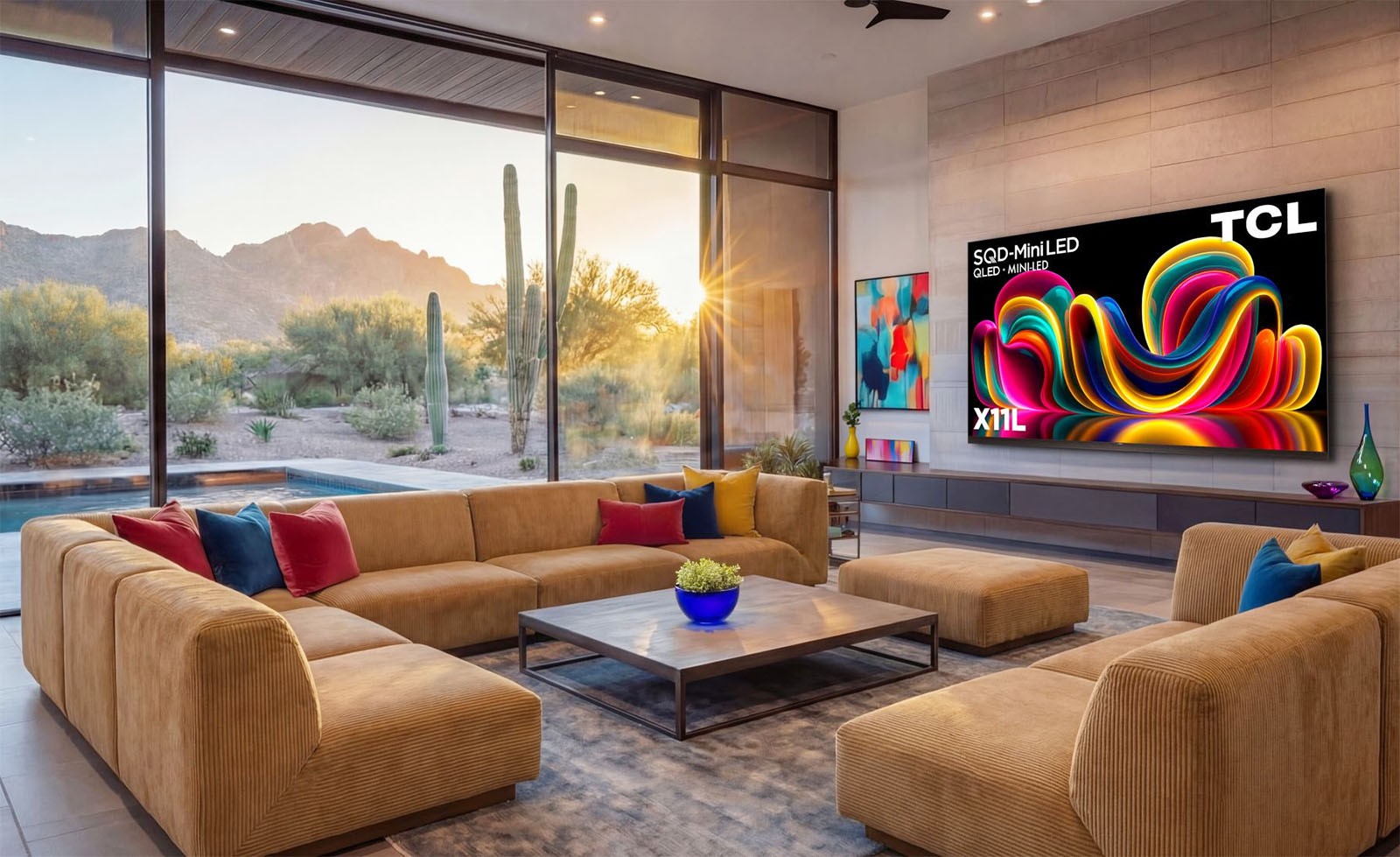
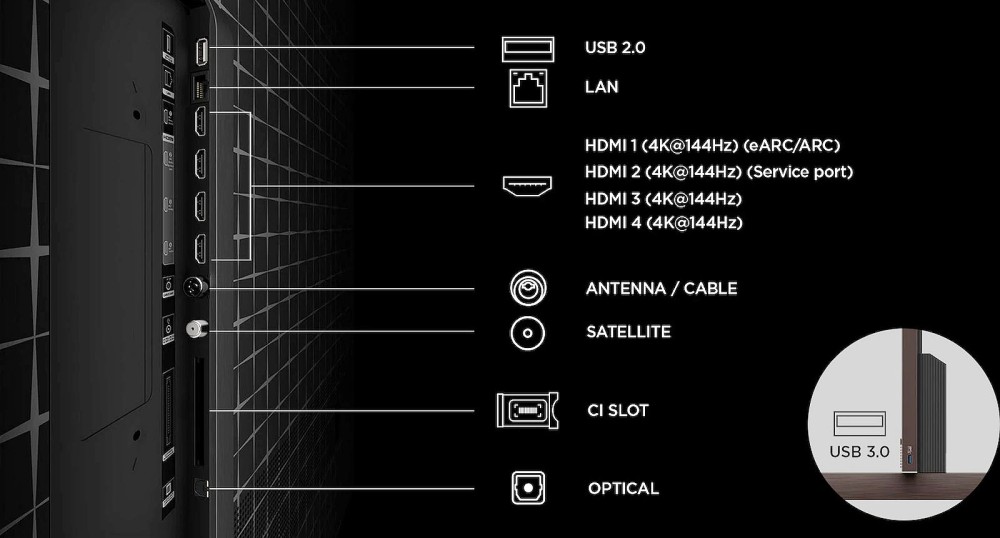
As you'll see later in this focus on the new SQD Mini LED technology, TCL is confidently presenting some impressive figures. While these are indeed high-end, even ultra-high-end (for the flagship model), equipment whose specifications surpass those of virtually all competing televisions, it's worth remembering that for a panel to deliver vibrant colors and exceptional contrast dynamics, meeting the demands of the latest HDR certifications, its backlighting plays a crucial role. This is an area where TCL excels, having dedicated significant research and development to it for years (the company invented the Mini LED technology). Thus, after the QLED, then Mini LED and QD Mini LED technologies, the brand is now offering the SQD Mini LED (Super Quantum Dot Mini LED) process in 2026. A new light source peaking at 11,000 nits. This technology revolves around several essential elements. First, the light source is based on a new chip whose quantum dots have been completely redesigned. They are thus capable of delivering 53.8% more powerful light than that offered by conventional Mini LEDs. At the heart of this Gen 8 backlighting are further optimized diodes called Super Condensed Micro Lenses (34 patents held as of 2026). According to the brand, these microlenses with their optimized geometry guarantee a more homogeneous distribution of the light emitted by the diodes, without shadows cast by a specific prism, thus further reducing the phenomenon of light haloing in certain images. These various optimizations allow for a considerable reduction in the size of each Local Dimming zone. Their number reaches a record 20,736 individually managed zones on the exceptional X11L series and on the 115-inch model. On this flagship series, screen brightness also reaches 11,000 nits (an intensity adjusted with peaks on the C8L and C7L series, at 6,000 nits and 3,000 nits respectively), measured live during the last Experts Meet Experts event held in mid-May in Warsaw (see our news article "11,000 nits at TCL, proof in video!"), a level that corresponds to the theoretical maximum of HDR10 and Dolby Vision HDR formats. As a reminder, current OLED panels peak between 4,000 and 4,500 nits, while the best Mini LEDs of 2025 will range between 3,000 and 6,500 nits. This brightness, managed by a 26-bit backlight controller (compared to 23 bits in 2025) and an improved Halo Control system (see illustration below), guarantees perfect visibility even in bright ambient light. A native contrast ratio of 7,000:1 and BT.2020 coverage. Similarly, regarding contrast, the sophisticated Local Dimming guarantees a native contrast ratio of up to 7,000:1 across these three series. This provides the image with impressive dynamic range. Moreover, unlike other display technologies, the SQD Mini LED architecture is capable of maintaining the reproduction of the highest brightness peaks over time. On the color front, TCL has also designed a new filter for its C7L, C8L, and X11L ranges. Dubbed the Ultra Color Filter, it uses particles of only 5 nanometers, instead of the traditional 60 nanometers, allowing for much more precise adaptation of each basic filter to the pixel it is associated with. It incorporates TCL's exclusive Deep Color system, combining Super Quantum Dot (Super QLED) crystals with a more efficient alloy, an UltraColor filter, and an advanced color fidelity algorithm, with the aim of eliminating Color CrossTalk (bleeding of hues at the level of adjacent colors), improving color purity, and maximizing brightness. The panel thus boasts full BT.2020 gamut coverage, or 100%, a colorimetric standard previously reserved for professional reference displays. In comparison, the best current Mini LED TVs reach approximately 83% of BT.2020, while QD OLED panels top out at around 90%. The sum and mastery of all these specifications allow for ever-finer control of the halo effect, a reduction in color bleed at the level of adjacent sub-pixels, a 33% wider color gamut, and 69% greater accuracy. The overall image gains in realism and naturalness. TCL C7L, C8L, and X11L: three exceptional series with an ultra-slim design. To make these technological advances available to the public, TCL is deploying its remarkable expertise in Mini LED technology within a trio of high-performance televisions. Technological innovation is not limited to image quality. Indeed, SQD Mini LED technology allows for the design of very thin devices with virtually no bezels. With a thickness of only 2 cm for the very high-end X11L, using the ultra-flat wall mount provided by TCL in the TV box, the screen thus seems to fit naturally into the wall. TCL is rolling out SQD Mini LED technology across several major screen sizes, with the X11L culminating in very large formats (see photo below) of 75" (190 cm), 85" (216 cm), and 98" (249 cm). HDMI 2.1 connectivity designed for the future. The SQD Mini LED technology, a major evolution of the TCL C8L and TCL X11L TVs, is not, however, the be-all and end-all of 2026 televisions. Many other improvements are on the menu. For the first time on the brand's televisions, all four HDMI ports are version 2.1 (thanks to the Pentonic 800 chip), compatible with 4K at 144 Hz across these entire ranges (except for the TCL C7L TVs, which only have two inputs). [abc]HDMI[/abc] 2.1 (Pentonic 700 processor required). FreeSync Premium Pro and a dedicated Game Bar are also included. The TSR AI processor supports upscaling, color correction, and motion optimization. An update planned for 2026 will add support for Dolby Vision 2 Max HDR and access to Xbox Game Pass without an external console. The main interface is based on Google TV, with Gemini integration for voice control, allowing users to adjust picture settings using voice commands.
FreeSync Premium Pro and a dedicated Game Bar are also included. The TSR AI processor supports upscaling, color correction, and motion optimization. An update planned for 2026 will add support for Dolby Vision 2 Max HDR and access to Xbox Game Pass without an external console. The main interface is based on Google TV, with Gemini integration for voice control, allowing users to adjust picture settings using voice commands.