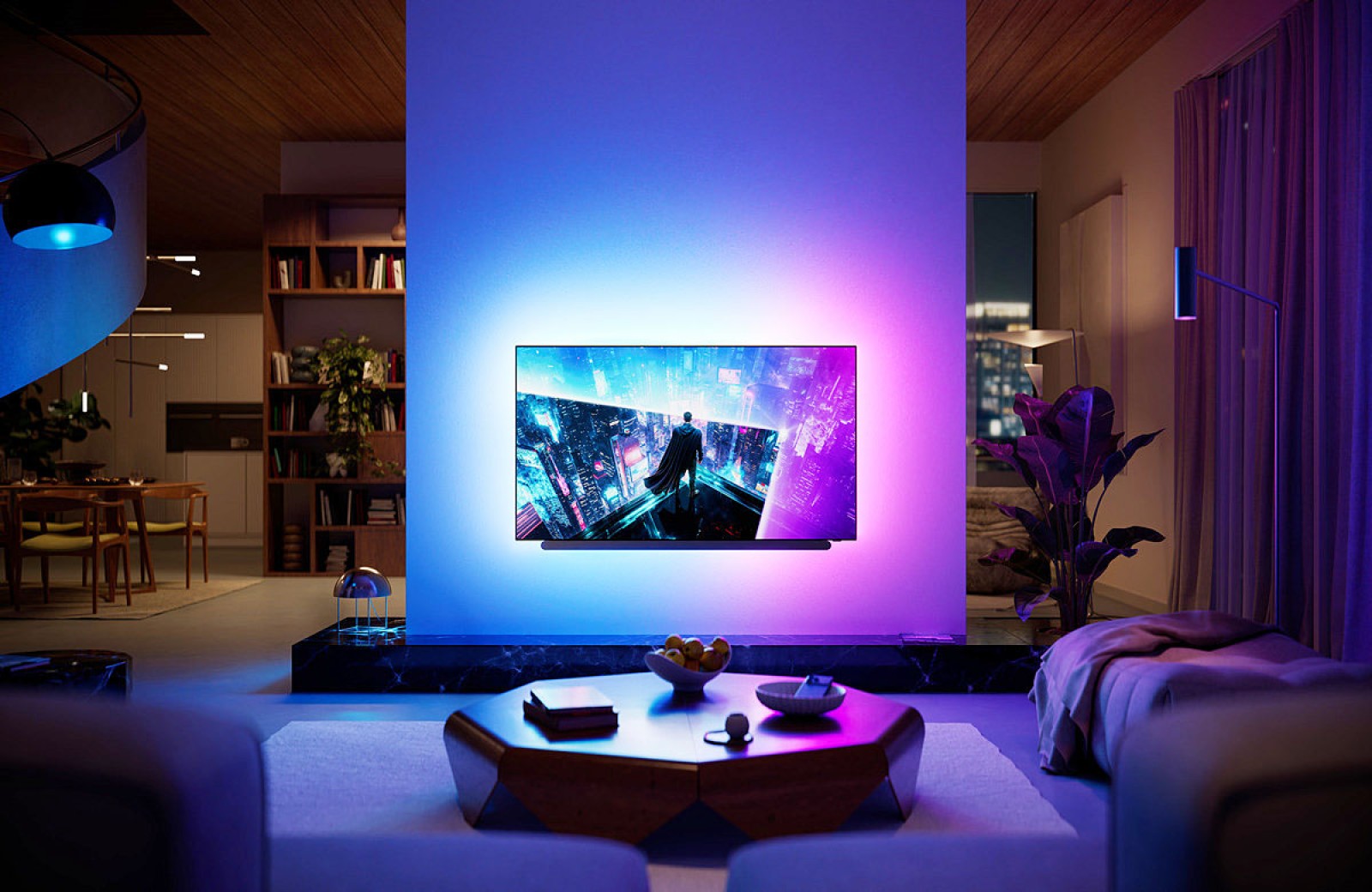
Philips OLED911 TV: Meta 4.0 panel, up to 4,500 nits and 99.5% DCI-P3 coverage
The Meta 4.0 panel is one of the highlights of this new generation. Thanks to its Tandem 2.0 structure (four red, green, and blue emitting layers), it reaches an impressive peak brightness of 4,500 nits, while maintaining 400 nits in 100% APL (the entire white screen area). Color coverage displays 99.5% of the DCI-P3 gamut and 83% of BT.2020, while the anti-reflective coating blocks more than 99% of reflections. The TV thus gains in readability, brightness, and color purity, even in very bright environments. Also noteworthy is a 165 Hz refresh rate.
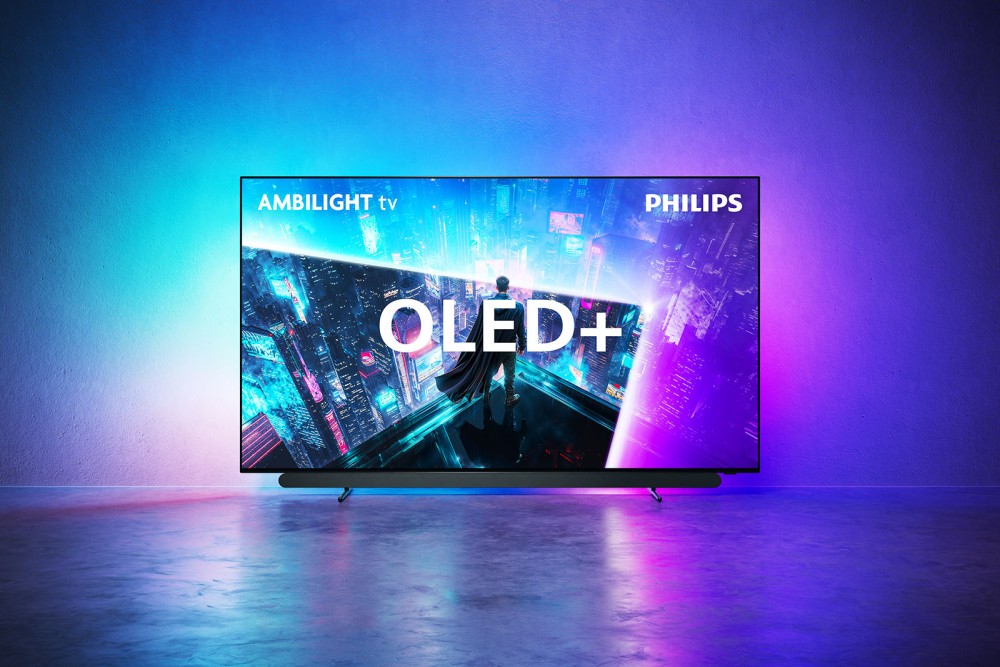
Philips OLED911 TV: P5 AI Gen10, AI-Assisted HDR and Authentic Motion££££
Video processing is handled by the 10th generation P5 AI processor, which introduces more precise HDR Tone Mapping thanks to artificial intelligence. The new AI HDR Expansion/Restore function analyzes each image to restore the original brightness dynamics of the content.
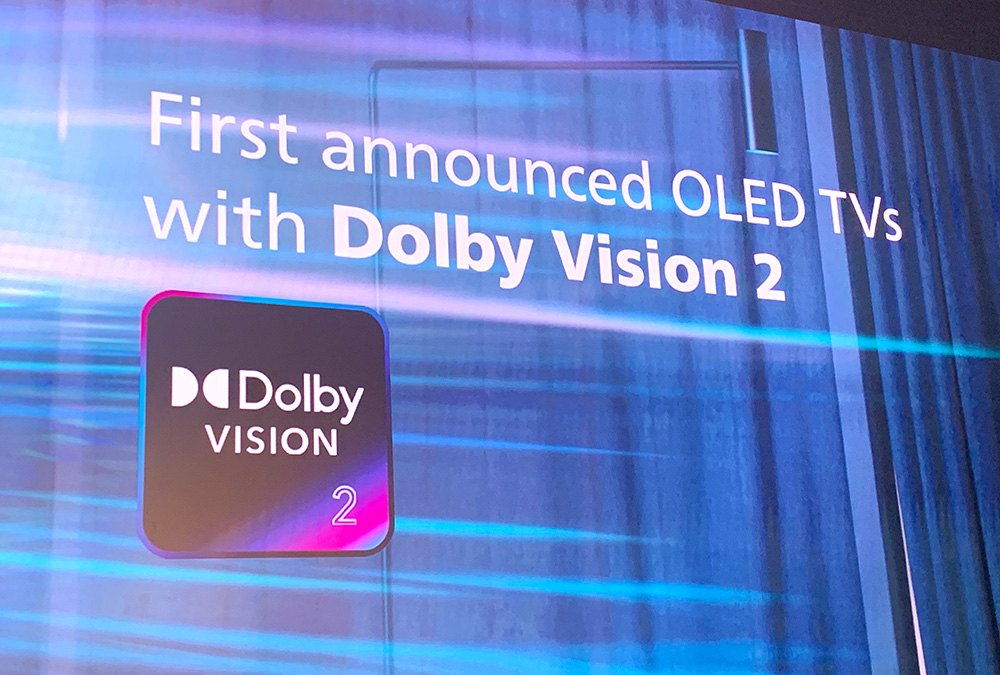
Philips OLED911 TV, Dolby Vision 2 Max compatibility££££
Through the Dolby Vision 2 Max label (see our IFA 25 news > HDR Dolby Vision 2, everything you need to know about this new quality standard!) and the next-generation Dolby Image Engine, the TVs benefit from Content Intelligence features: Precision Black and Light Sense optimize black levels and light balance, respectively. Similarly, the TV also benefits from Authentic Motion, a new shot-by-shot motion processing system designed to deliver a more cinematic, judder-free picture. The TV automatically adapts the display to the content and viewing environment, further enhancing contrast accuracy and color saturation, while respecting the directors' creative intent.
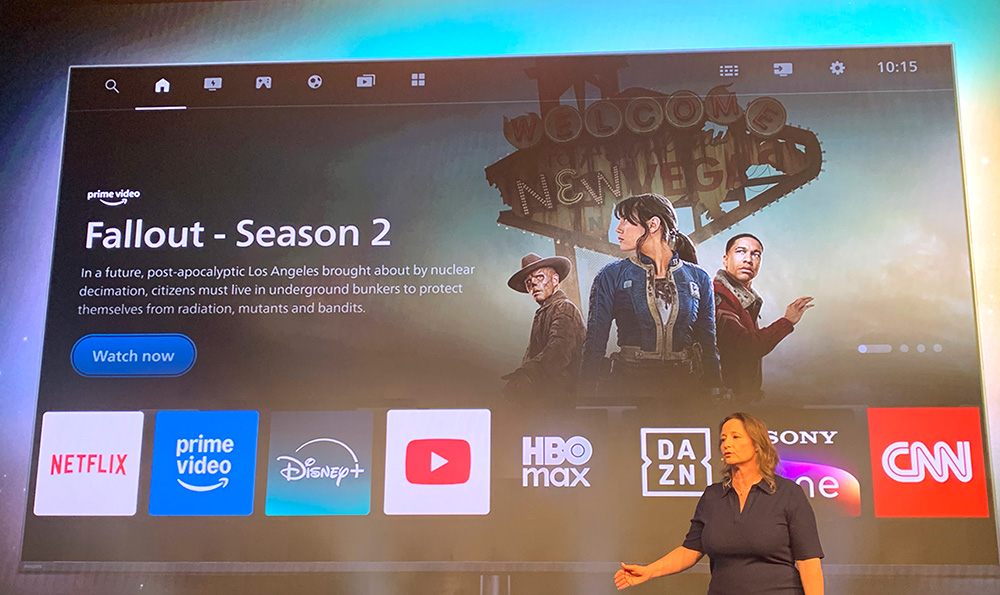
Philips OLED911 TV: 4-sided Ambilight + AmbiScape, room-wide immersion ££££
Visual immersion is extended by four-sided Ambilight, now compatible with the AmbiScape feature (see our Philips AmbiScape news: switch to Ambilight for total immersion). This feature allows you to synchronize the TV's lighting with several connected lamps in the room, extending the ambient light far beyond the screen's frame for an immersive experience. Philips OLED911 TV: Bowers & Wilkins 3.1 audio with a completely redesigned architecture. The audio system, designed by Bowers & Wilkins, has also been completely revamped. The front 3.1 soundbar system adopts an LCR (Left, Center, Right) architecture where each channel features two new 45mm fiberglass midrange drivers and a 19mm titanium tweeter equipped with an improved Nautilus tube. The speakers are isolated from the chassis using TPE (Thermoplastic Elastomer) mounts to reduce vibrations and improve sound accuracy. At the rear, a decoupled subwoofer incorporates a 75mm woofer accompanied by four passive force-cancelling radiators mounted on a TPE and silicone system. This sound architecture allows for a slimmer screen design; the maximum thickness is 39.9mm compared to 47.3mm on the OLED910 models. The system is powered by eight amplification channels, each with its own signal processing, for a total power of 81W. An external subwoofer can be added to further enhance the bass. The sound system is available in two sizes depending on the OLED911 screen size: 48"/55" and 65"/77". Philips OLED911 TVs: refined design and premium finishes. The design of the Philips OLED911 TVs has also been refined. In addition to the reduced maximum thickness mentioned above, the displays feature a minimalist black metal frame and rounded feet with a satin black finish, for elegant integration into any interior. Philips OLED911 TV, Titan OS Smart TV. No Google TV or Android TV on the Philips OLED911 screens, but the new Titan OS 2026 Smart TV interface, developed in partnership with the European company of the same name and launched in 2024 on the Philips Mini LED PML9049 and Philips LED PUS8909 TV series. This operating system, created by former employees of Disney, Roku, Rakuten, KKR, etc., allows access to major streaming services (Netflix, Prime Video, YouTube, Disney+, HBO Max, Pluto TV, DAZN... Apple TV is planned for spring). Similarly, it integrates AirPlay 2, Google Assistant, Works with Alexa certification, and Control 4 compatibility, not to mention the new Moments app, which allows for the quick transfer of your favorite photos stored on your smartphone to the big screen and the addition of visual and sound effects. Good news for gamers: the latest version of Titan OS offers the Game Bar feature, providing access to the Blacknut and Boosteroid cloud gaming services. This also allows users to quickly access game settings and switch between them on the fly without wasting time, for example, by choosing from various game profiles (FPS, RPG, etc.). MEMC Gaming motion compensation processing and Dolby Vision Gaming HDR deliver an exceptional gaming experience. Specifically, the Game Bar displays an FPS counter (frames per second) to optimize game settings, and it supports FreeSync Premium and G-Sync certifications. More details will be available in an upcoming news update. Release is expected this summer. Pricing is still unknown.