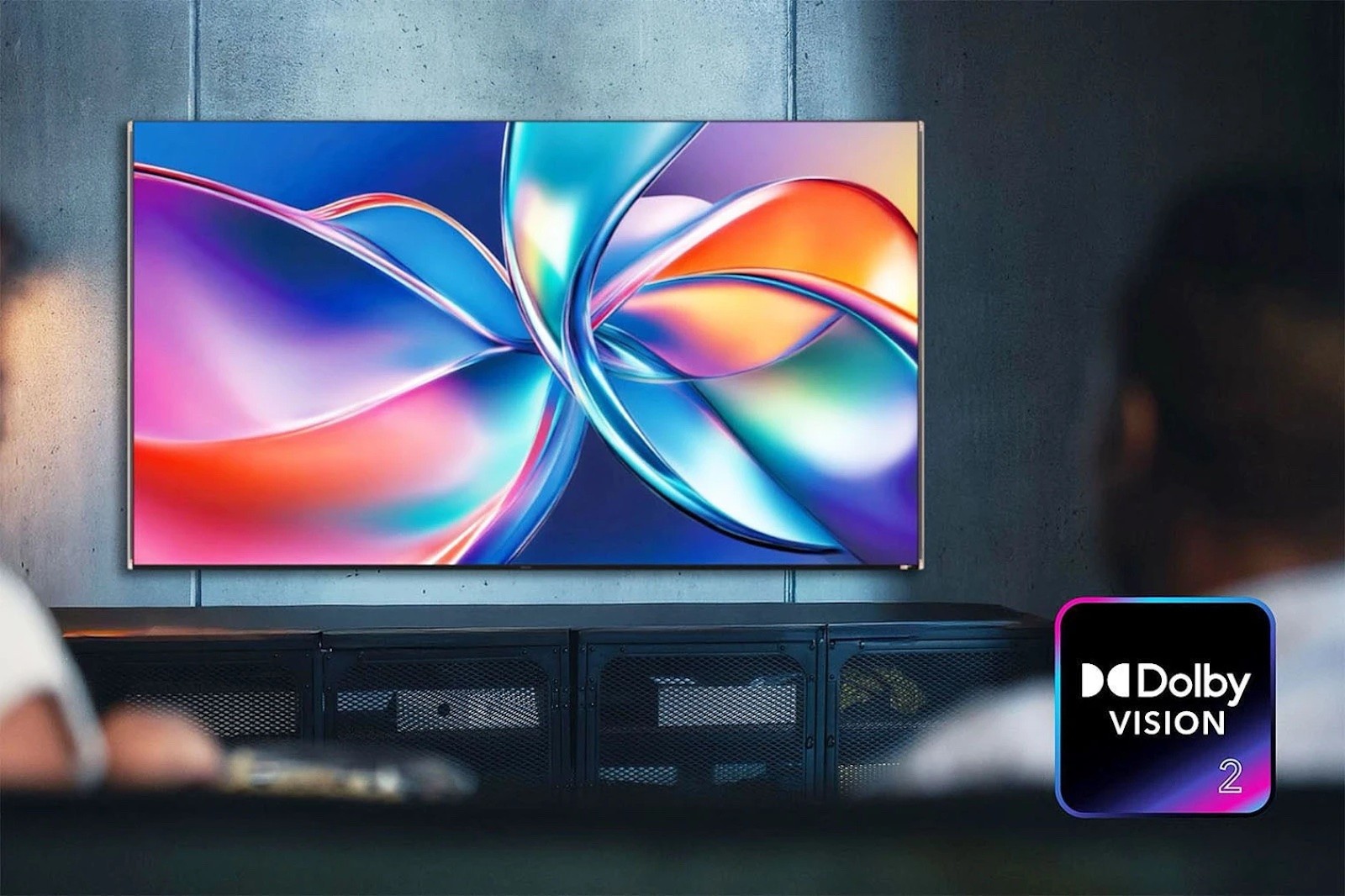
No, because Dolby Laboratories saw it coming and offers a conversion solution for content providers that is less costly than remastering from scratch. “The cost of this operation is simply astronomical,” explained Dolby Laboratories’ director of commercial strategy, Jonas Klittmark, to our colleagues at Techradar. “So instead, we offer a semi-automated method that uses modern techniques such as machine learning to facilitate the creation of the additional metadata needed to take full advantage of Dolby Vision 2”.
A quick update for streaming platforms
This process adds most of the new features of Dolby Vision 2 HDR to Dolby Vision content (see our news IFA 25 > Dolby Vision 2 HDR, new Tone Mapping and better image quality?) without requiring the work to be remastered, even if some features are excluded because they require human expertise. Good news for streaming platforms, then, which will be able to convert their films and series to the new format, in bulk.
Authentic Motion and Precision Black excluded from the process
The options sacrificed by this automated process are Authentic Motion and Precision Black. The first makes it possible to control the motion handling applied in real time by the TV; the second manages scenes that appear too dark on screen compared with the creator’s vision.
A single label for Dolby Vision 1 and 2 HDR
Klittmark adds that Dolby Vision 2 HDR will not be considered, strictly speaking, as a new exclusive format. Thus, all content, whether Dolby Vision 1 or 2 HDR, will be labeled under the same Dolby Vision term.