 2026 also marks the concrete introduction of the first monitors equipped with these panels on the market, such as MSI’s 27" 4K 120 Hz model or Lenovo’s ThinkVision P27UL-40 professional monitor. During demonstrations at the Wuhan facility, working 14" and 16" prototypes as well as foldable concepts helped validate the maturity and versatility of the technology.
Major technological advantages over traditional FMM-mask Oled
If TCL CSOT (a manufacturing entity separate from TCL Electronics, dedicated to finished products) is investing heavily in IJP, it is because of its structural superiority in terms of efficiency. By depositing organic inks directly onto the substrate, the process achieves a material utilization rate of more than 90%, considerably reducing waste compared with traditional evaporation methods. This architecture makes it possible to increase the panels’ luminous efficiency, reduce color fringing, limit blue-light exposure for greater visual comfort, and, above all, lower manufacturing costs by dispensing with the constraints of fine metal masks (FMM).
Oled IJP, heading toward increased competition against Woled and QD Oled
Classic Oled is of course not destined to disappear in the short term, but it finds in IJP technology a formidable technological challenger. By succeeding in stabilizing large-scale inkjet printing, TCL CSOT is reshaping the monitor and mobile-computing market. The year 2027 is thus shaping up to be the real battleground where Oled IJP will challenge LG Display and Samsung Display technologies on price-performance grounds.
The first monitors and laptops integrating TCL CSOT’s Oled IJP panels are set to go on sale in 2026, while the opening of the industrial 8.6th-generation t8 line is planned for 2027. Final pricing and precise launch schedules remain part of the strategic choices made by each partner brand integrating these panels.
Reminder of the key features of TCL CSOT’s Oled IJP panels:
• Technology type: Inkjet-printed Oled (IJP for Inkjet Printing)
• Organic material utilization rate: above 90%
• Industrial infrastructure: t12 lines (Wuhan, 5.5th generation) and future t8 line (Guangzhou, 8.6th generation planned for 2027)
• Target application areas: computer monitors, laptops, tablets, and foldable displays
• Expected advantages: reduced manufacturing costs without FMM masks, increased luminous efficiency, reduced blue light, and reduced color fringing
Picture
TCL CSOT: an update on the industrialization of inkjet-printed Oled panels (IJP)
18.11.2026 • 10h47
Long presented as the Holy Grail of the organic display industry, inkjet-printed Oled (IJP) technology is reaching a major industrial milestone under the impetus of TCL CSOT. Between optimized yields, a drastic reduction in production costs compared with FMM masks, and the scheduled deployment of the 8.6th-generation t8 production line in 2027, the market for high-end monitors and laptops is about to enter a new era, directly competing with the Woled and QD Oled processes developed respectively by LG Display and Samsung Display.
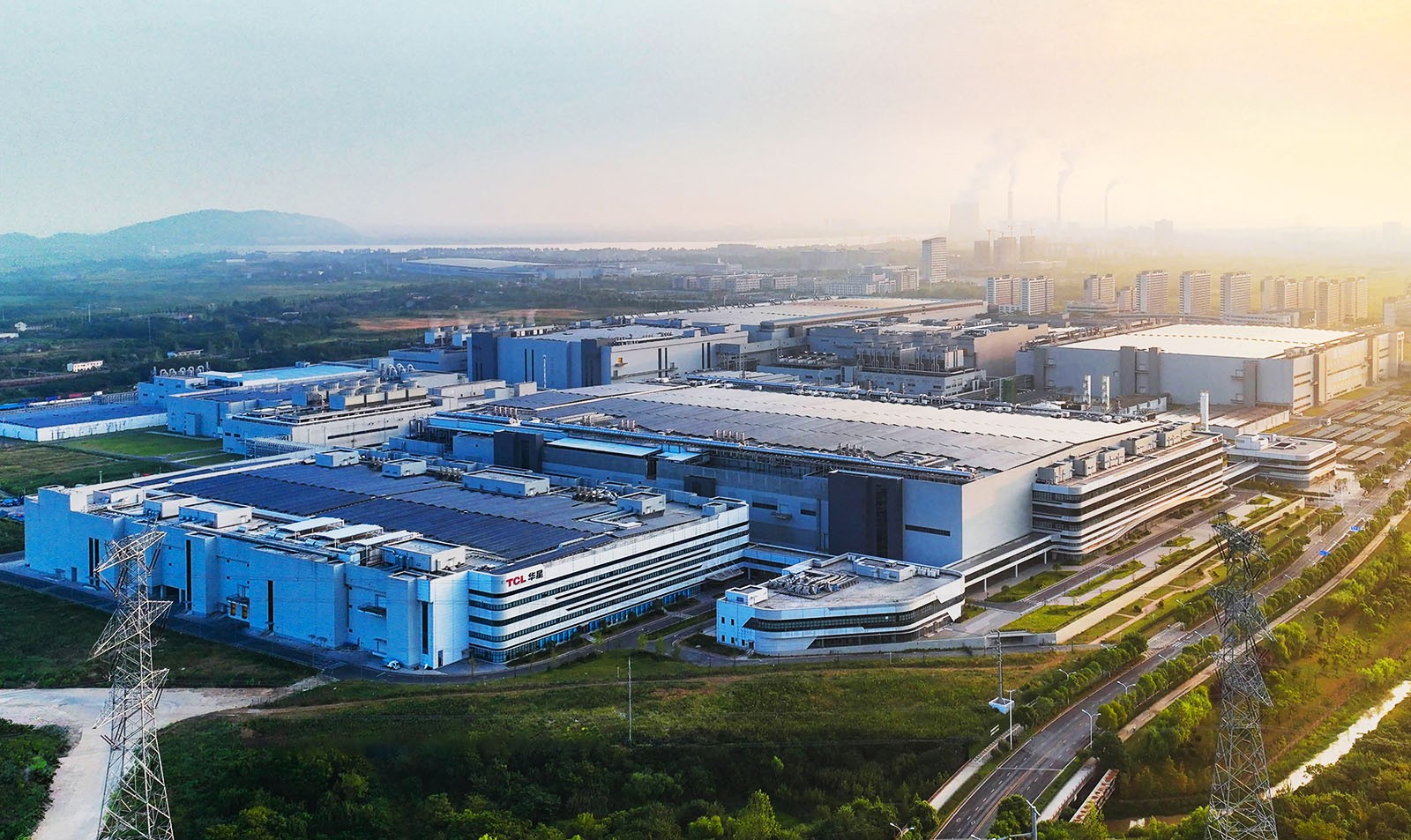
Long confined to the promises of the lab, Oled IJP technology is finally making the move to industrial-scale production. On the occasion of the DTC 2026 show held in Wuhan last week, the screen manufacturing subsidiary of TCL Technology unveiled the progress of its direct-printing process for organic materials onto the substrate. Thirteen years of research and development were needed to reach this (almost) mass-production stage, launched as early as 2024 on the 5.5th-generation line at the Wuhan factory with panels initially reserved for the medical sector, before expanding the scope to computing and consumer applications.
Industrialization driven on TCL CSOT’s t12 and t8 lines
Production today revolves mainly around the t12 lines in Wuhan and the future t8 line in Guangzhou. Scheduled to enter service in 2027, the latter will be the world’s very first 8.6th-generation Oled IJP production line, tailor-made to supply monitor, laptop, and touch-tablet manufacturers in volume.
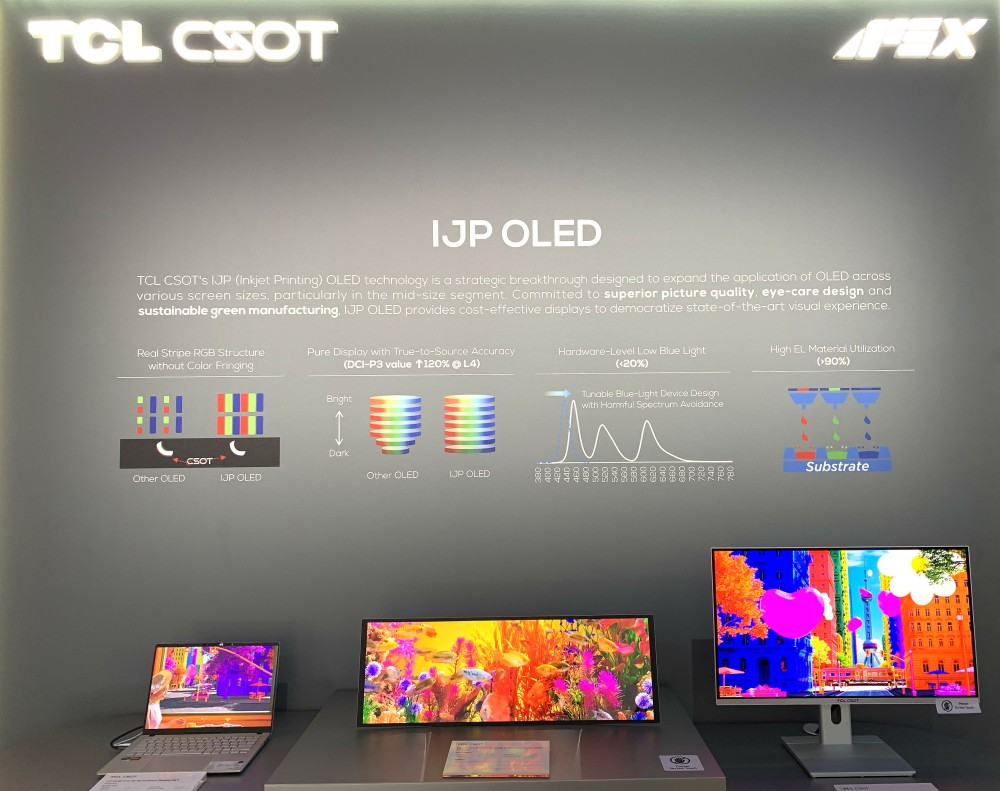
2026 also marks the concrete introduction of the first monitors equipped with these panels on the market, such as MSI’s 27" 4K 120 Hz model or Lenovo’s ThinkVision P27UL-40 professional monitor. During demonstrations at the Wuhan facility, working 14" and 16" prototypes as well as foldable concepts helped validate the maturity and versatility of the technology.
Major technological advantages over traditional FMM-mask Oled
If TCL CSOT (a manufacturing entity separate from TCL Electronics, dedicated to finished products) is investing heavily in IJP, it is because of its structural superiority in terms of efficiency. By depositing organic inks directly onto the substrate, the process achieves a material utilization rate of more than 90%, considerably reducing waste compared with traditional evaporation methods. This architecture makes it possible to increase the panels’ luminous efficiency, reduce color fringing, limit blue-light exposure for greater visual comfort, and, above all, lower manufacturing costs by dispensing with the constraints of fine metal masks (FMM).
Oled IJP, heading toward increased competition against Woled and QD Oled
Classic Oled is of course not destined to disappear in the short term, but it finds in IJP technology a formidable technological challenger. By succeeding in stabilizing large-scale inkjet printing, TCL CSOT is reshaping the monitor and mobile-computing market. The year 2027 is thus shaping up to be the real battleground where Oled IJP will challenge LG Display and Samsung Display technologies on price-performance grounds.
The first monitors and laptops integrating TCL CSOT’s Oled IJP panels are set to go on sale in 2026, while the opening of the industrial 8.6th-generation t8 line is planned for 2027. Final pricing and precise launch schedules remain part of the strategic choices made by each partner brand integrating these panels.
Reminder of the key features of TCL CSOT’s Oled IJP panels:
• Technology type: Inkjet-printed Oled (IJP for Inkjet Printing)
• Organic material utilization rate: above 90%
• Industrial infrastructure: t12 lines (Wuhan, 5.5th generation) and future t8 line (Guangzhou, 8.6th generation planned for 2027)
• Target application areas: computer monitors, laptops, tablets, and foldable displays
• Expected advantages: reduced manufacturing costs without FMM masks, increased luminous efficiency, reduced blue light, and reduced color fringing
2026 also marks the concrete introduction of the first monitors equipped with these panels on the market, such as MSI’s 27" 4K 120 Hz model or Lenovo’s ThinkVision P27UL-40 professional monitor. During demonstrations at the Wuhan facility, working 14" and 16" prototypes as well as foldable concepts helped validate the maturity and versatility of the technology.
Major technological advantages over traditional FMM-mask Oled
If TCL CSOT (a manufacturing entity separate from TCL Electronics, dedicated to finished products) is investing heavily in IJP, it is because of its structural superiority in terms of efficiency. By depositing organic inks directly onto the substrate, the process achieves a material utilization rate of more than 90%, considerably reducing waste compared with traditional evaporation methods. This architecture makes it possible to increase the panels’ luminous efficiency, reduce color fringing, limit blue-light exposure for greater visual comfort, and, above all, lower manufacturing costs by dispensing with the constraints of fine metal masks (FMM).
Oled IJP, heading toward increased competition against Woled and QD Oled
Classic Oled is of course not destined to disappear in the short term, but it finds in IJP technology a formidable technological challenger. By succeeding in stabilizing large-scale inkjet printing, TCL CSOT is reshaping the monitor and mobile-computing market. The year 2027 is thus shaping up to be the real battleground where Oled IJP will challenge LG Display and Samsung Display technologies on price-performance grounds.
The first monitors and laptops integrating TCL CSOT’s Oled IJP panels are set to go on sale in 2026, while the opening of the industrial 8.6th-generation t8 line is planned for 2027. Final pricing and precise launch schedules remain part of the strategic choices made by each partner brand integrating these panels.
Reminder of the key features of TCL CSOT’s Oled IJP panels:
• Technology type: Inkjet-printed Oled (IJP for Inkjet Printing)
• Organic material utilization rate: above 90%
• Industrial infrastructure: t12 lines (Wuhan, 5.5th generation) and future t8 line (Guangzhou, 8.6th generation planned for 2027)
• Target application areas: computer monitors, laptops, tablets, and foldable displays
• Expected advantages: reduced manufacturing costs without FMM masks, increased luminous efficiency, reduced blue light, and reduced color fringing