 TCL P89L: QD-Mini LED without price compromise
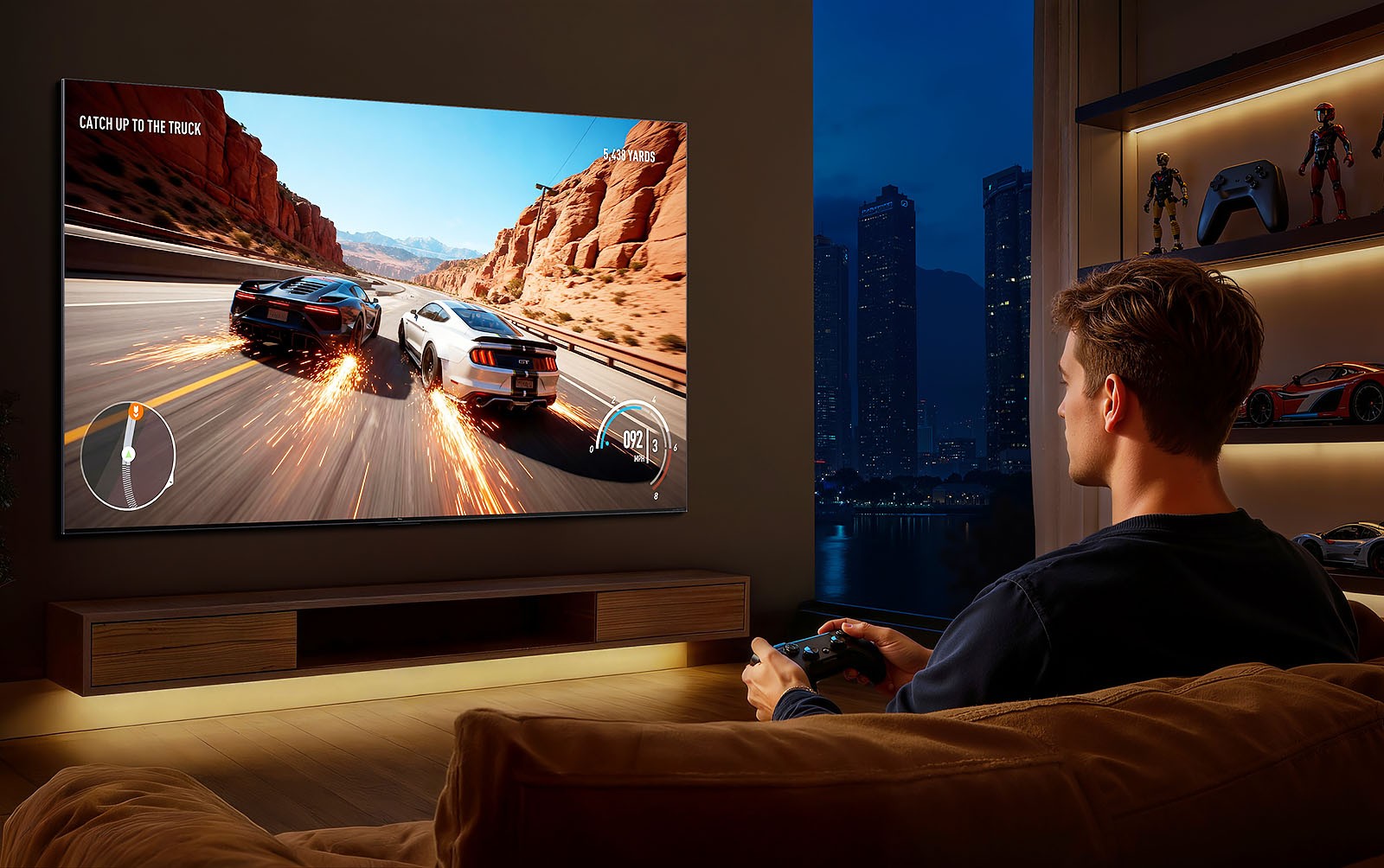
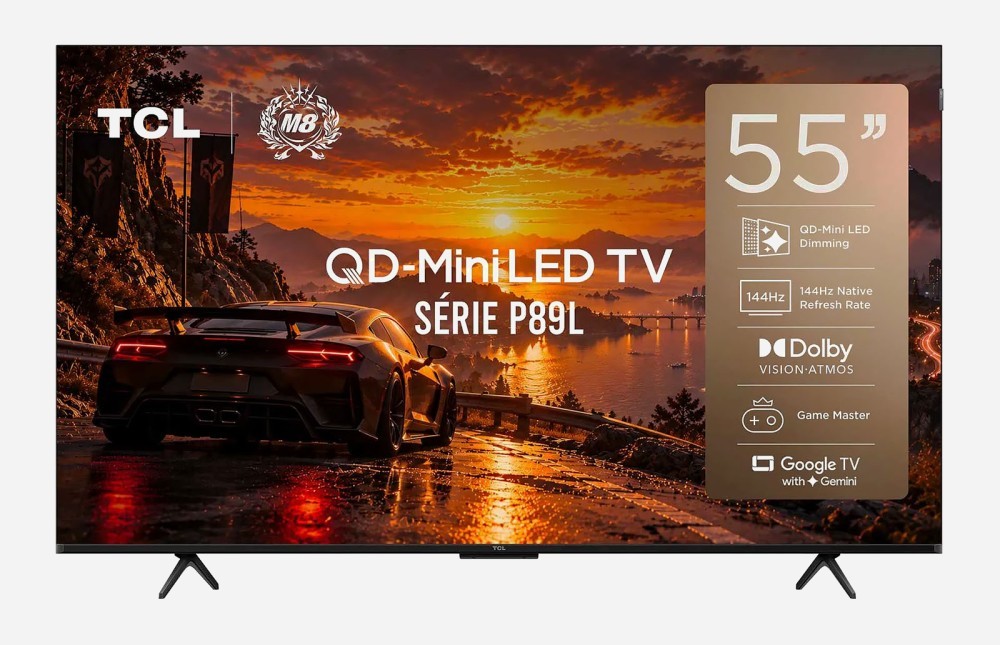
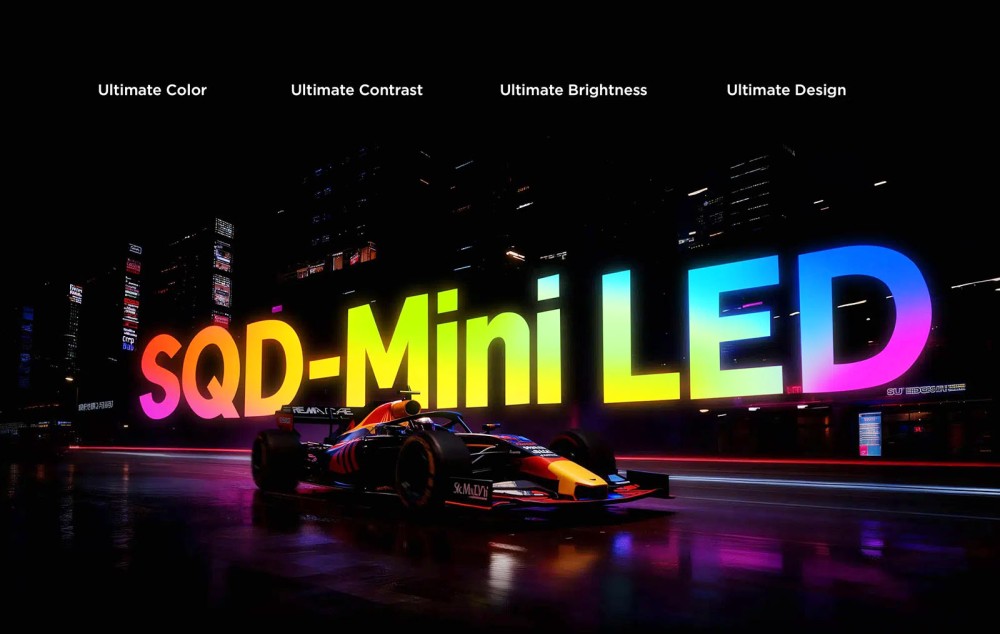
We start with the P89L series. The Asian manufacturer’s idea is simple: offer the essentials of modern gaming at a rock-bottom price: the HVA [abc]LCD[/abc] panel natively reaches 144 Hz, ensuring formidable sharpness during fast camera movements, while the Mini LED backlighting, built as true FALD (Full Array Local Dimming) so it can completely turn off dark areas, combined with a QLED filter for rich and saturated colors, delivers peak brightness close to 1,000 nits on the largest models for a punchy HDR image. All high dynamic range technologies are on board ([abc]HDR10+[/abc] and [abc]HDR Dolby Vision[/abc]) to fully exploit the dynamic metadata of recent games, and display smoothness holds up very well on the most frantic games such as Fast FPS or racing simulations. The deal is done.
 TCL P89L and TCL C79L, connectivity and fluidity: a clean sweep
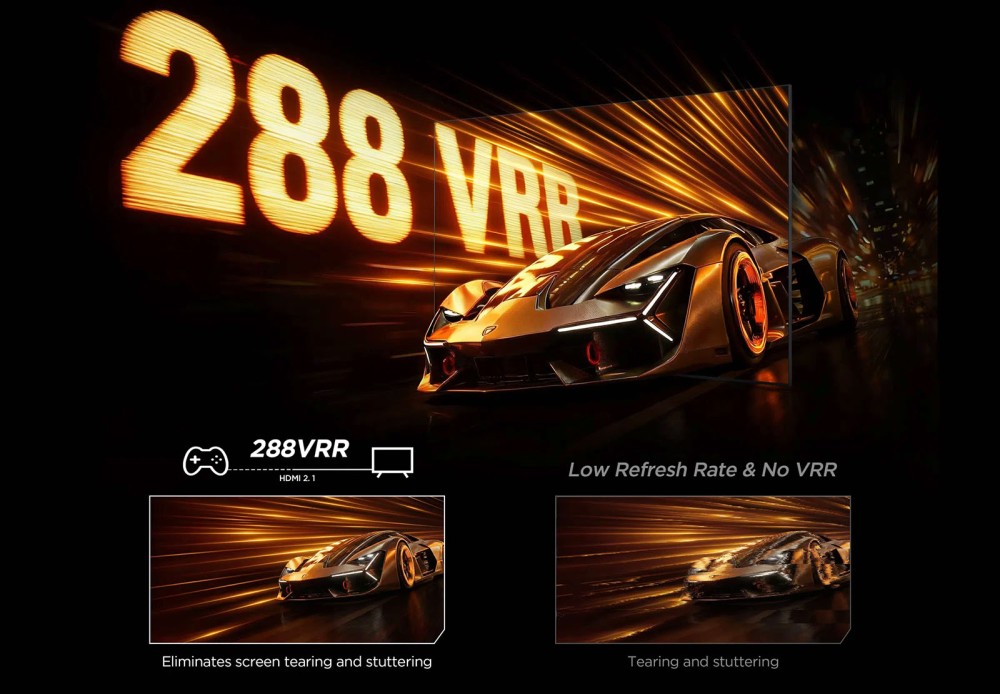
On the connectivity side, no misstep. Both series include [abc]HDMI[/abc] 2.1 ports. The [abc]ALLM[/abc] (Auto Low Latency Mode) feature activates automatically as soon as the console starts up to switch the TV into its most responsive mode. [abc]VRR[/abc] is indeed present (48 Hz to 144 Hz), backed by AMD FreeSync Premium (Premium Pro version on the C79L supporting [abc]HDR[/abc] Tone Mapping). No more screen tearing when the framerate (the number of frames per second displayed) stutters. TCL has even provided a DLG (Dual Line Gate) accelerator to boost refresh rate to 288 Hz in 1080p by halving the vertical resolution. e-sports fans who swear by absolute fluidity will appreciate it.
 TCL P89L and TCL C79L, input lag reduced to nothing
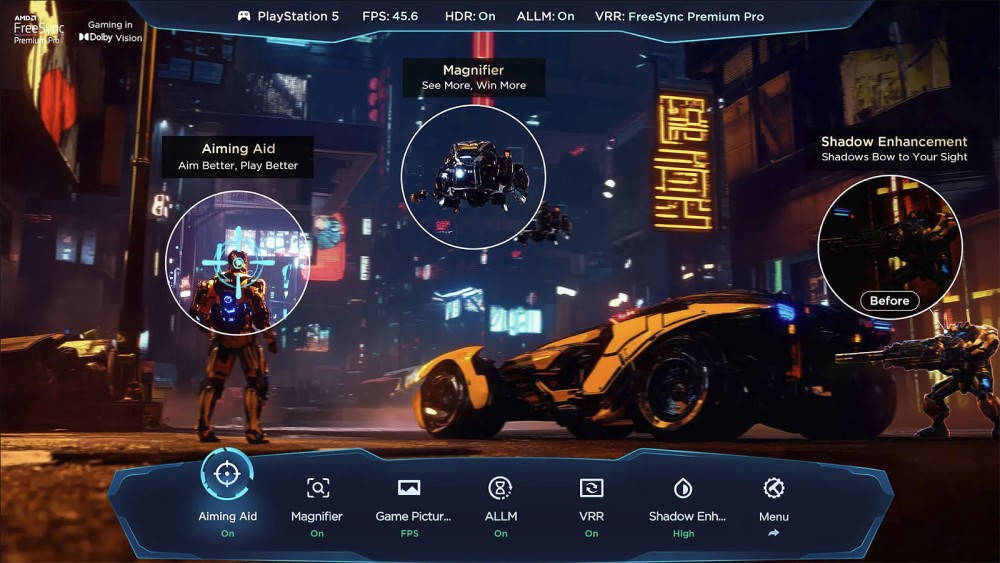
When it comes to gaming, responsiveness remains the key issue. The P89L settles at a very clean input lag of around 12 milliseconds. The C79L does even better, dropping below 6 ms in [abc]2 160p[/abc]/60 Hz, a performance worthy of high-end PC monitors. On-the-fly settings are managed via Game Master Pro 2.0: you can fine-tune the display in dark areas to spot enemies, activate a virtual aiming reticle in the center of the screen, or check the display frequency at a glance thanks to a floating Game Bar (see photo below) without leaving the game.
 TCL P89L and TCL C79L, audio serving immersion
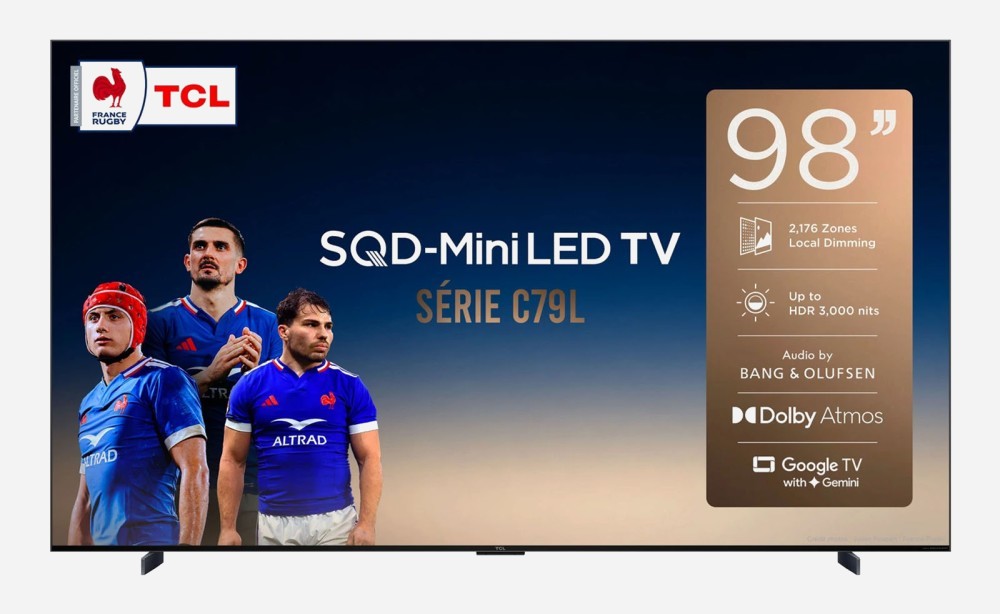
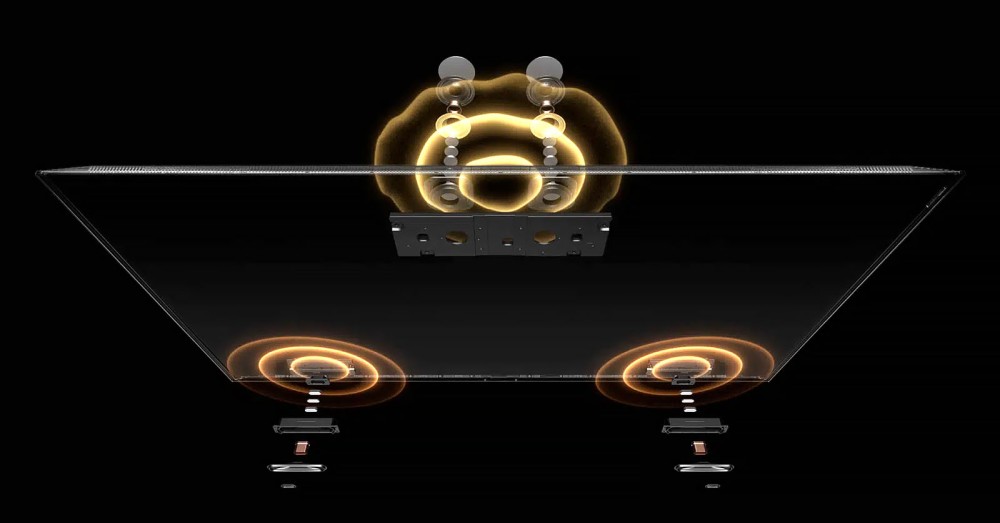
Because responsiveness also comes from good sound spatialization, useful for example to detect the footsteps of an opponent approaching from behind, the audio section rises to the challenge. Both series decode immersive [abc]Dolby Atmos[/abc] and [abc]DTS:X[/abc] formats without issue (DTS Virtual:X processing is even included on the C79L for effective vertical virtualization). Under the hood, the TCL P89L starts with a [abc]2.0[/abc] system delivering 20 W on the 55'', but benefits from a much beefier [abc]2.1[/abc] configuration from the 65'' onward (35 W on the 65''/75'' and 40 W on the 85''/98''). For its part, the TCL C79L immediately goes all out with a 2.2 system delivering 40 W (2 x 10 W + 2 x 10 W dedicated to bass, see illustration below) benefiting from the expertise of Bang & Olufsen, the manufacturer’s partner. Finally, HDMI [abc]eARC[/abc] compatibility allows the most demanding users to send full-bandwidth audio streams to a soundbar or home theater amplifier with no loss in quality.
 TCL P89L and TCL C79L, diagonals up to 98 inches
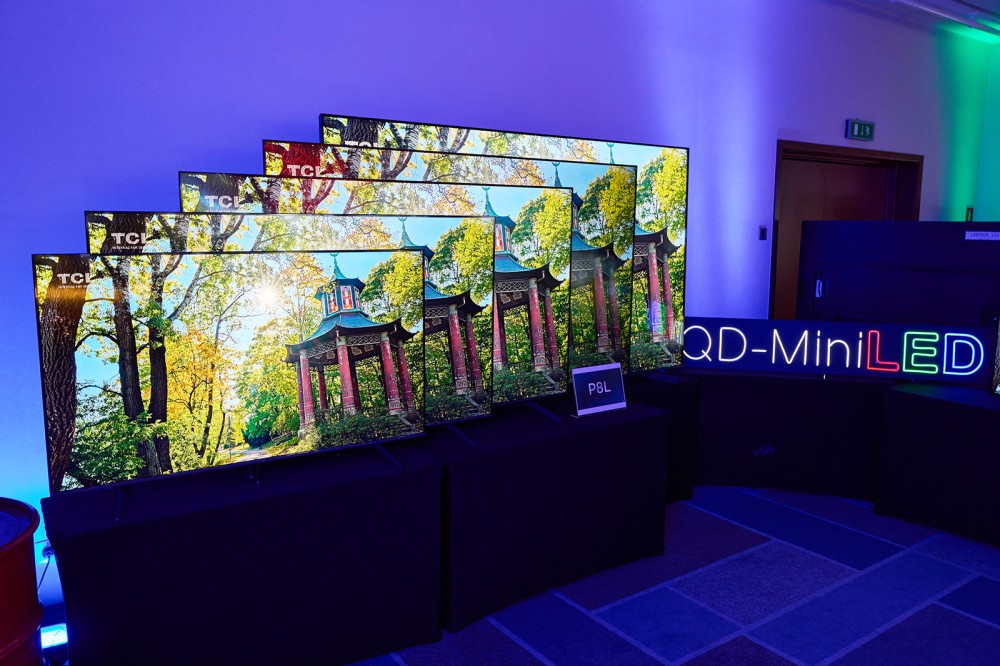
Of course, TCL remains true to its reputation: think big. The P89L and C79L are both available in 55'' (140 cm), 65'' (165 cm), 75'' (191 cm), 85'' (216 cm) and 98 inches (249 cm). A maximum size that literally replaces a projector to fully immerse yourself in an open world or on a multiplayer battlefield, with the decisive advantage of overwhelming brightness and a lasting installation in the living room.
The TCL P89L and TCL C79L televisions are available. For the P89L series, indicative prices range from €549 (55'') to €1,799 (98''). The C79L series requires an additional financial effort, from €799 (55'') to €2,399 for the 98-inch version. Finally, note that for gamers looking to push the bar of demanding requirements a little further with a greatly increased density of FALD zones, the highly capable higher-end SQD-Mini LED TCL C89L series is also available at very attractive prices just days before Black Friday, from €799 (55") to €2,399 (98").
Reminder of the key features of TCL C79L TVs:
• 10-bit panel
• [abc]LCD[/abc] panel
• [abc]Ultra HD[/abc] [abc]4K[/abc] panel
• 144 Hz panel
• HVA 2.0 Pro Panel panel
• Processor: Quad Core MT9653
• Wide Color Gamut function
• [abc]UPnP[/abc] ([abc]DLNA[/abc]) multimedia gateway function
• DVR function
• [abc]eARC[/abc] function
• Imax Enhanced function
• [abc]VRR[/abc] function
• [abc]ALLM[/abc] (Auto Low Latency Mode) function
• 4K [abc]HFR[/abc] 120 function
• Game Master Pro 2.0 function
• DLG 288 Hz function
• Super Resolution 2.0 function
• TSR AIPQ function
• Super Quantum Dot (SQD) function
• [abc]HDR10[/abc] and [abc]HDR HLG[/abc] compatibility
• [abc]HDR10+[/abc] compatibility
• [abc]Miracast[/abc] compatibility
• [abc]HDR Dolby Vision[/abc] compatibility
• [abc]HDCP[/abc] 2.2 compatibility
• [abc]HEVC[/abc] compatibility
• [abc]Dolby Atmos[/abc] compatibility
• [abc]DTS:X[/abc] compatibility
• [abc]HBBTV[/abc] compatibility
• [abc]CEC[/abc] compatibility
• [abc]Canal Ready[/abc] compatibility
• DTS Virtual:X compatibility
• Wi-Fi ac compatibility
• DTS compatibility
• FreeSync Premium Pro compatibility
• HDR10+ Adaptive compatibility
• [abc]Chromecast (intégré)[/abc] compatibility
• HDR Dolby Vision IQ compatibility
• [abc]Bluetooth[/abc] 5.4 compatibility
• Wi-Fi 5 compatibility
• HDR Dolby Vision 2 compatibility
• 100% BT.2020 compatibility
• [abc]Imax Enhanced[/abc] certification
• Filmmaker Mode certification
• Outputs: 1 [abc]optique[/abc], 1 headphone
• Inputs: 2 [abc]HDMI[/abc] 2.1 inputs, 2 [abc]HDMI[/abc] 2.0 inputs, 1 USB Host 3.0 port, 1 USB Host 2.0 port, 1 Ethernet port, 1 [abc]CI+ port[/abc]
• [abc]AirPlay 2[/abc] multimedia
• HomeKit multimedia
• Google Assistant multimedia
• Works with Alexa multimedia
• Google TV multimedia
• Google Gemini multimedia
• MEMC motion compensation
• SQD-Mini [abc]LED[/abc] [abc]Local Dimming[/abc] backlight system
• Input Lag: < 6 ms in 2 160p/60
• Number of zone(s): 800 for the 55", 1 152 for the 65", 1 352 for the 75", 1 624 for the 85" and 2 176 for the 98"
• Peak brightness: 2,700 nits for the 55", 3,000 nits for the others
• Mini LED technology: yes
• [abc]DVB-T[/abc]2 tuner
• [abc]DVB-C[/abc] tuner
• [abc]DVB-S[/abc]2 tuner
• Sound section: 2.2
• Power: 40 W (2 x 10 + 2 x 10)
Reminder of the key features of TCL P89L TVs:
• 10-bit panel
• [abc]LCD[/abc] panel
• [abc]Ultra HD[/abc] [abc]4K[/abc] panel
• HVA Panel
• 144 Hz panel
• Processor: Quad Core
• Wide Color Gamut function
• [abc]UPnP[/abc] ([abc]DLNA[/abc]) multimedia gateway function
• DVR function
• [abc]eARC[/abc] function
• [abc]VRR[/abc] function
• [abc]ALLM[/abc] (Auto Low Latency Mode) function
• Quantum Dots function
• DLG 288 Hz function
• AiPQ Pro function
• [abc]HDR10[/abc] and [abc]HDR HLG[/abc] compatibility
• [abc]HDR10+[/abc] compatibility
• [abc]HDR Dolby Vision[/abc] compatibility
• [abc]HDCP[/abc] 2.3 compatibility
• FreeSync Premium compatibility
• [abc]HEVC[/abc] compatibility
• [abc]Dolby Atmos[/abc] compatibility
• [abc]HBBTV[/abc] compatibility
• [abc]Fransat[/abc] compatibility
• [abc]CEC[/abc] compatibility
• [abc]Canal Ready[/abc] compatibility
• [abc]Bluetooth[/abc] 5.4 compatibility
• [abc]Wi-Fi[/abc] ac compatibility
• [abc]DTS-HD[/abc] compatibility
• [abc]DTS:X[/abc] compatibility
• Outputs: 1 [abc]optique[/abc]
• Inputs: 4 [abc]HDMI[/abc] inputs including two 2.1 and 2 [abc]HDMI[/abc] 2.0 inputs, 1 USB Host 3.0 port, 1 Ethernet port, 1 [abc]CI+ port[/abc]
• [abc]AirPlay 2[/abc] multimedia
• Google Assistant multimedia
• Google TV multimedia
• Mini [abc]LED[/abc] [abc]Local Dimming[/abc] backlight system
• MEMC motion compensation
• Input Lag: 12 ms
• Peak brightness: 450 nits for the 55"/65"/75" and 85", 1,000 nits for the 98"
• [abc]DVB-T[/abc]2 tuner
• [abc]DVB-C[/abc] tuner
• [abc]DVB-S[/abc]2 tuner
• Sound section: [abc]2.0[/abc] for the 55" (20 W), [abc]2.1[/abc] and 35 W for the 65"/75", [abc]2.1[/abc] and 40 W for the 85"/98"