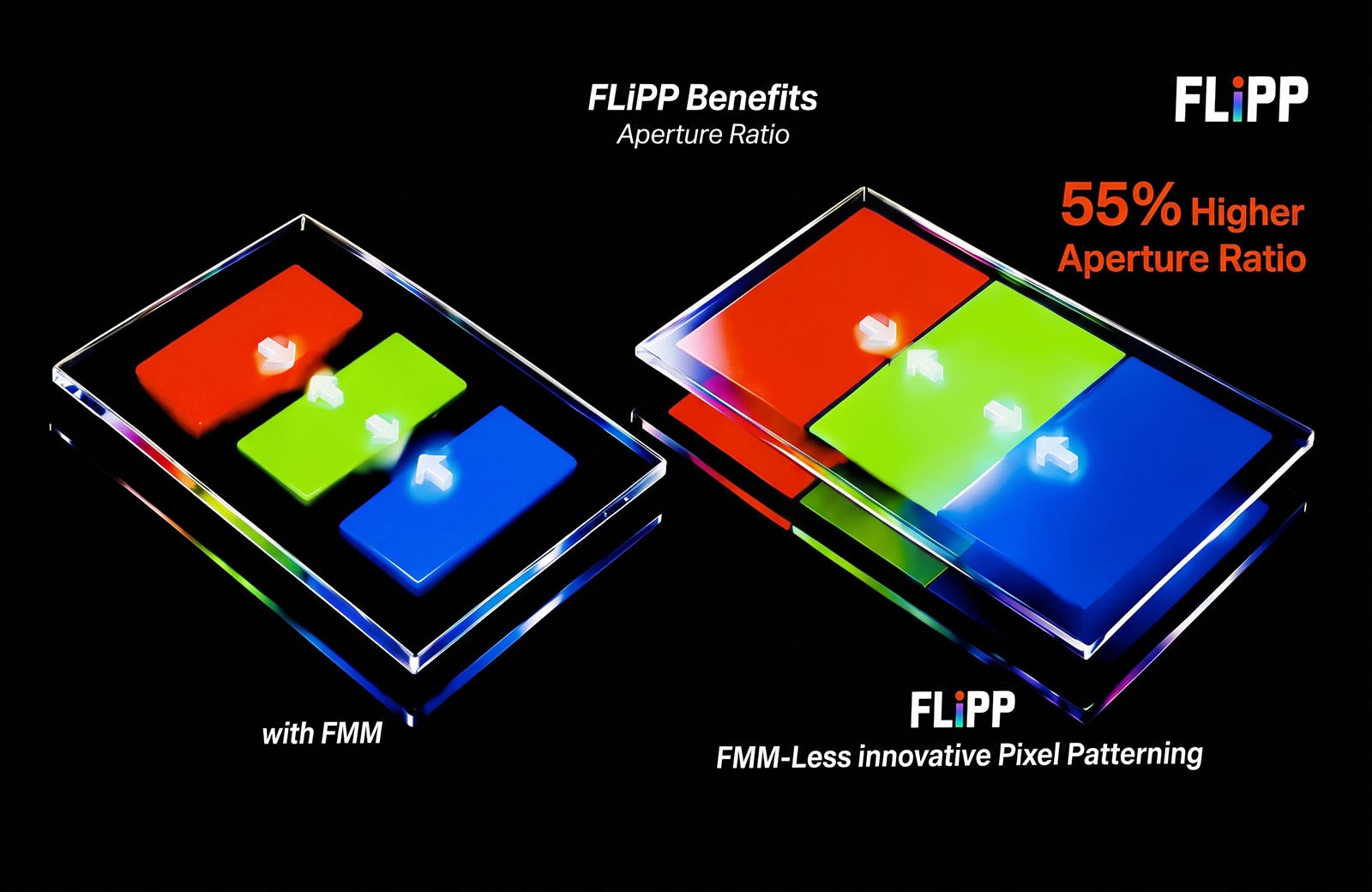
Revealed this summer at the IMID 2026 trade show in Busan, the FLiPP process (FMM-less Innovative Pixel Patterning) is now entering a concrete industrial phase. The Korean media outlet Aju Press reports that LG Display is preparing to convert its existing P8 factory in Paju to deploy this technology without a fine metal mask (FMM), with large-scale production targeted for 2029.
Reminder of the FLiPP process unveiled this summer
At the International Meeting on Information Display 2026 conference held last summer in Busan, South Korea, LG Display presented a technology capable of durably transforming the [abc]Oled[/abc] industry. As we already mentioned in our columns this summer, this process dispenses with fine metal masks (FMM) traditionally used as stencils to deposit organic materials, which impose precision and cost limitations, especially at large sizes. Named FLiPP, for FMM-less Innovative Pixel Patterning, this lower-cost manufacturing process delivers displays up to 1.6 times brighter, 2.4 times more durable, and consumes 13% less energy, on diagonals ranging from 1" to 100", for televisions as well as connected objects.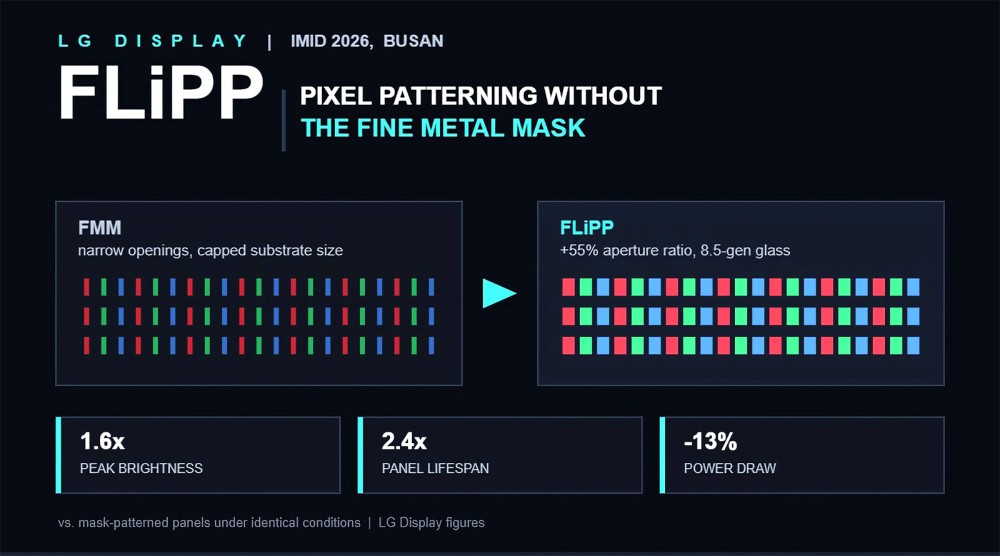 Conversion of the P8 plant in Paju instead of Gen 8.6
According to information gathered by Aju Press from industry sources, LG Display is preparing to convert one of its existing facilities into a production line dedicated to the FLiPP process. More specifically, this is the P8 plant in Paju, which currently operates an 8.5-generation line.
Unlike its competitors such as Samsung Display and BOE, LG Display will therefore not invest heavily in Gen 8.6, after already withdrawing from the race for Gen 10.5 large Oled displays (cf. our news item LG Display buries its Gen 10.5 Paju Oled TV plant and refocuses large sizes in China), in order to focus on the FLiPP process.